Search This Blog

Monday, 8 June 2015

More Norwegians convert to Islam

Youthful rebellion and, paradoxically, a perceived need for stronger rules in Norway’s liberal society are believed to be behind a recent rise in the number of Norwegians converting to Islam. “I think we need stronger rules,” one young Norwegian convert told newspaper Aftenpostenon Monday.
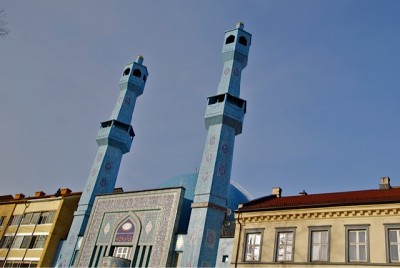
Mosques in Oslo are steadily gaining new converts, given the estimates from researchers specializing in Islam. PHOTO: newsinenglish.no

Mosques in Oslo are steadily gaining new converts, given the estimates from researchers specializing in Islam. PHOTO: newsinenglish.no

No one knows for certain how many “ethnic Norwegians” have converted to Islam, according to Aftenposten, but researchers believe their numbers have increased from around 500 at the end of the 1990s to around 3,000 today. That’s still a tiny percentage of the Norwegian population, but the growth rate is significant, as is the perceived reason behind it: “Converting to Islam is perhaps the most extreme form of youthful rebellion today,” Anne Sofie Roald, a professor in religion, told Aftenposten, which launched a series of reports over the weekend about Islam in Norway. Islam, Roald noted, is a religion that can require a lifestyle for converts that’s “extremely different from the life they’ve lived earlier.”

Setting limits
Roald, who converted herself more than 30 years ago, also cites the larger Muslim population now in Norway and its heightened visibility as factors influencing Norwegians who are looking for a religious alternative. She agrees with researcher Olav Elgvin of the University of Bergen that many converts also launch into their new lives as Muslims wholeheartedly. Some become radical extremists while others, such as Roald herself, later moderate the degree to which they practice their new faith.

“In general, many converts become ‘more Catholic than the pope,'” Roald told Aftenposten. She converted to Islam in 1982 and initially used a hijab but later stopped wearing it: “The reality can be that the ideas about limits set by religion can be more appealing than the limits themselves.” Like Elgvin, though, she thinks conservative Islam represents clear limits and a new form of security in a very free and liberal society like Norway’s, which can attract those rebelling a society where “almost anything goes.” The historic student protests of the 1960s led to social freedoms that now, perhaps, a new generation in rebelling against. That’s a paradox in a country that prides itself on its own hard-won freedom and independence, and its egalitarian society.

One 26-year-old Norwegian woman named Elsa, who didn’t want to be identified, told Aftenposten she’d fallen in with a “bad” group and abused both drugs and alcohol. She began to pray and then took Arabic language lessons, which gave her “a good gut feeling” about Islam. She began to read more, and said that what appealed to her most were the rules within Islam that were much stronger than in Norwegian society in general.

“I think people need that, guidelines and rules and consequences in the form of punishment or praise,” Elsa told Aftenposten. “Something to believe in.”

‘Religious experience’ on Utøya
Morten Ibrahim Abrahamsen, now a 23-year-old man from Hamar, converted after surviving the massacre of July 22, 2011 on the island of Utøya that was carried out by another young but right-wing anti-Islamic extremist. Abrahamsen told Aftenposten he had a religious experience while he desperately tried to hide from the lone gunman Anders Behring Breivik, who killed 69 people at the Labour Party’s youth summer camp that Abrahamsen was attending.

“I met a lot of resistance, also publicly, from people who thought I was vulnerable and had all but been forced to convert,” Abrahamsen said, after he’d declared his faith to representatives of the Islamic organization Islam Net in Oslo. It’s been a target of controversy for organizing conferences featuring radical Muslim clerics, for segregating men and women who attend and for spreading the word about Islam from information stands on the street, among other things.

“But now it’s been nearly four years (since the massacre and his conversion) and I’m thriving with my religion,” Abrahamsen told Aftenposten. “I have found the sense of calm I was looking for.” He and several of the others interviewed oppose extremism and claim the Koran instructs them to follow the laws of the land where they live. They cannot, according to Abrahamsen, demand introduction of sharia law that can impose death sentences for such things as infidelity, homosexuality or abandoning the faith, while he noted that sharia law itself “is often not practiced as it should be, and many people who gain power often make mistakes.”

Missionary tradition lives on
In line with the millions of Christian missionaries who’ve been active around the world for centuries, representatives of Islam are also keen to win new converts. Among them is another young health care worker, 22-year-old “Maria,” who also declined further identification but said her conversion and subsequent decision to wear not only a hijab but also gloves and an occasional niqab that covers her face shocked colleagues. Their reaction was so negative that she fund a new jobs where she now feels accepted. Her Norwegian family also accepted her conversion and she says her Muslim girlfriends have become like “sisters” for her.

Kari Vogt, a religious historian at the University of Oslo who’s viewed as one of Norway’s foremost experts on Islam, told Aftenposten the new Norwegian converts to Islam, mostly young, “are individuals who gain an interest for Islam as a religion or social alternative. There’s a large and openn lifestyle market, and Islam is a missionary religion.”

The young converts are not free, however, from encountering personal conflicts. “Elsa” now has a Muslim boyfriend and their relationship, she admitted, violates Islamic rules because they are not married. “I practice more seriously than he does, my boyfriend thinks that’s a bit scary,” Elsa told Aftenposten with a smile. “He thinks I’m always so serious.”

Hamodia Cancels For-Pay Meetings with Litzman After Angry Letter

Last week, JP reported on a conference being organized by Hamodia in which the newspaper offered to organize meetings with MK Yaakov Litzman, the new Deputy Health Minister, for the sum of $25,000.

MK Litzman was quick to respond. In a letter addressed to the Director General of the newspaper that was published by Kol Chai, Litzman asked to cancel the event.

 “The media reported the existence of a document inviting companies and organizations to meet with me for a fee at the important Administrators Forum. I want to emphasize to you that the document was made without my knowledge, and of course entirely without my consent to the above program,” Litzman wrote. “I am distressed that you have chosen to involve areas of marketing and advertising with the proper conduct of the health system. It is not according to proper procedure and medical ethics.”

“Needless to say, it is well known that there is no need for anyone wishes to contact me to pay,” he continued. “Enterprises and organizations turn to me and meet me every day. My bureau is open to all comers. Since taking office two weeks ago I have met with dozens of them including the managers of HMOs, and these meetings are entirely without Compensation and unconditional. On my desk have accumulated two thousand public inquiries from all origins and all are treated without any demand for payment from those addressing it. I would like to make amends in this respect. “

Hamodia rushed to cancel the aforementioned sessions.
litzman

French Islamic Group on Trial After Jewish 'Target' List Found

(Reuters). Fourteen members of a banned Islamic group went on trial in Paris on Monday facing terrorism charges after a list of Jewish stores marked “targets” was allegedly found in files belonging to its leader.

The stores on the list found in the possession of Mohamed Achamlane, 37, included some in the Hyper Cacher chain, like the one in which four people were killed in a gun siege two days after the Islamist killings at satirical weekly Charlie Hebdo.

The 14 are charged with “criminal conspiracy related to a terrorist enterprise”. Some of the 14 members of the “Forsane Alizza” (“The Horsemen of Pride” in Arabic) group also face charges of illegal possession of weapons.

Achamlane, who has previous convictions for offences related to weapons and violence, denies any plans to carry out attacks and said the group’s aim was simply to “unite young Muslims”.

“Since the tragic events of January, things are being whipped up out of all proportion,” his lawyer Bérenger Tourné told reporters at the trial, which is due to last until June 23. “My client was preparing no attack.”

The group was created in 2010 with the official goal of stopping the spread of Islamophobia.

However it was banned by the government in March 2012 after jihadist propaganda appeared on its website. Searches carried out after the arrests of Achamlane and his associates that month unearthed weapons and the list of Jewish stores.

France has remained on top security alert since the Jan. 7-9 killings at satirical weekly Charlie Hebdo and the Jewish foodstore by Islamist gunmen acting in league with each other.

Tuesday, 2 June 2015

Print This Post Send to Kindle Researchers at Israel’s Weizmann Institute First To Grow Immune System Cells in Lab


The global science community is looking to Rehovot, where a team of Israeli scientists at the Weizmann Institute managed to grow lymphatic cells in the lab for the first time ever.

For over a century, scientists have debated the origins of the lymphatic system—a parallel system to the blood vessels that serves as a conduit for everything from immune cells to fat molecules to cancer cells. This issue has now been resolved by Dr. Karina Yaniv of the Weizmann Institute’s Biological Regulation Department. In a study reported in Nature, Yaniv and her team revealed how the lymphatic system develops in the embryo.

In the initial stages of the research project, Yaniv’s team members Julian Nicenboim and Dr. Guy Malkinson obtained images of developing zebrafish embryos, whose transparent bodies make it possible to document embryonic development in real time over several days. The scientists then played the movies backward, to identify the point at which the lymphatic system began to form.

To their surprise, they discovered that the cells that give rise to lymphatic vessels always originated in the same part of the embryo’s major vein. In that spot, the scientists found a niche of angioblasts, the same cells that a hundred years earlier were thought to be the source of lymph vessels, but were later neglected by researchers.

An in-depth genetic analysis, performed with the participation of graduate students Tal Lupo and Lihee Asaf, pointed to a gene called WNT5B, which was revealed to be the factor prompting stem cells to differentiate into lymphatic cells. When postdoctoral fellow Dr. Yogev Sela added WNT5B to human embryonic stem cells, these cells indeed differentiated into lymphatic cells—the first time such cells had been grown in the lab.

“We started out by imaging zebrafish, and ended up finding a factor that makes it possible to create lymphatic cells,” said Yaniv. “That’s the beauty of research in developmental biology: The embryo holds the answers, and all we have to do is watch and learn.”

The new research not only answers a longstanding question of how the lymph system arises, but can also provide important insights into disease, from metastasis to the abnormal accumulation of lymph fluids, particularly in the wake of surgery to remove cancerous tumors.

The research was performed in collaboration with the laboratories of Prof. Itai Yanai from the Technion—Israel Institute of Technology, Dr. Jacob Hanna of Weizmann’s Molecular Genetics Department, and Prof. Nathan Lawson of the University of Massachusetts.

(via Israel21c)

[Photo: Doron Horowitz / Flash90 ]

Charles Kennedy was ‘great friend of Jews and Israel’

By Marcus Dysch, June 2, 2015
Charles Kennedy has died, aged 55

Charles Kennedy has died, aged 55 

Board of Deputies president Jonathan Arkush has paid tribute to former Liberal Democrat leader Charles Kennedy, who has died aged 55.

Mr Kennedy had a warm relationship with the Jewish community during his time leading the party and also as an MP during his long political career.

Lib Dem leader from 1999 to 2006 – during which time he presided over the party’s best-ever election result – Mr Kennedy lost his seat to the Scottish National Party in last month’s election.

He died at his home in Fort William, Scotland, on Monday.

Mr Arkush said: “We are very saddened to hear of the untimely death of former Liberal Democrat party leader Charles Kennedy. 

“He was a great friend of the Jewish community and of Israel and his passing leaves a loss in British public life.”

Speaking at a Jewish event in Glasgow in 2009, Mr Kennedy had said he would “rather be known as a candid friend of Israel than tell people what they want to hear. My record speaks for itself”.

He was lauded by the Board and others in 2004 after he dismissed Jenny Tonge as a Lib Dem frontbencher for expressing sympathy with Palestinian suicide bombers.

But a year later Mr Kennedy was attacked by deputies when he appeared at a Board plenary meeting. The first Lib Dem leader to address the Board, he was told that subsequently giving her a peerage – making her Baroness Tonge – had caused offence.

He said his own Catholic faith helped him understand Jewish concerns on sensitive religious issues.

Obama’s Close Advisers Open Up About Strained Obama-Netanayhu Relationship

In advance of an exclusive interview with President Barack Obama, Channel 2’s Ilana Dayan interviewed the people who were most close to the president in the past years, finding out what happened to the US-Israel relationship and what was really said behind closed doors.

US Ambassador to Israel Dan Shapiro recalled Israeli Prime Minister Benjamin Netanyahu’s controversial speech before a joint session of congress last march as the tipping point in the frayed relationship between the two administrations. “We got a call from the House of Representatives, and we were very surprised,” he said, adding it was certainly not the best example of communications between two countries.

“We try not to surprise each other. I don’t intend to scare or warn anyone. Our commitment to friendship and the security of Israel is always there, even when there is tension between us,” said Shapiro.

Obama’s close advisor David Axelrod was more critical of Netanyahu.

“The world of politics everywhere is divided into two categories: the first and more common is the people who run for public office because they want to be somebody,” he explained. “A smaller group is made of respectable people who run for public office because they want to do something – something positive. Shape the future in a positive way. I think Benjamin Netanyahu completely falls in the first category.  He is a great politician. He knows what he needs to do to get through the next election. But it seems to me that Israel has to think about what they need to do to get through the next generation.”

He also recalled Obama venting in a moment of contemplation, telling him ‘You know, I think I am the closest thing to a Jew that has ever sat in this office. For people to say that I am anti-Israel, or, even worse,  anti-Semitic, it hurts.’

In a more in depth interview with Martin Indyk, U.S. Special Envoy for the Israeli–Palestinian Negotiations from 2013 to 2014, the latter claimed that “Israelis are ungrateful to this president.”

“They never appreciated his rule whereby nothing will harm the security of Israel,” he said. “Obama did not manage to get that statement out so that the Israelis can really feel it. You are an emotional nation, not a rational nation. You work from your gut and not your mind. “

When asked about Netanyahu’s speech to congress, Indyk said: “The Prime Minister really stuck his finger in President Obama’s eye, and this is a disturbing development. If Israel is really threatened by Iran, Netanyahu had to do things that would ensure the security of Israel, and the first step is to ensure that the relationship with the US is on safe ground. He needs to read the map, because if he fails, he will destroy the relationship, Israel will open a gap between then and their best friend and most important strategic partner.”

The interview with President Obama will be aired Tuesday evening after Israel’s evening news broadcast on Channel 2.

Jewish violinist finishes father's piece that Nazis broke up

In this photo taken Wednesday, May 27, 2015, Grammy Award-winning American violinist Eugene Drucker, plays his violin during a rehearsal concert at the Music Hall in Raanana, central Israel. In 1933, the violinist Ernest Drucker left the stage midway through a Brahms concerto in Cologne at the behest of Nazi officials, in one of the first anti-Semitic acts of the new regime. Now, more than 80 years later, his son, Eugene, has completed his father?s interrupted work. With tears in his eyes, Drucker performed an emotional rendition of the Brahms Violin Concerto in D Major, Op. 77, over the weekend with the Raanana Symphonette Orchestra. (AP Photo/Dan Balilty) (Dan Balilty/AP)

RAANANA, Israel (AP) — In 1933, the promising young Jewish-German violinist Ernest Drucker left the stage midway through a Brahms concerto in Cologne at the behest of Nazi officials, in one of the first anti-Semitic acts of the new regime.

Now, more than 80 years later, his son, Grammy Award-winning American violinist Eugene Drucker, has completed his father's interrupted work. With tears in his eyes, Drucker performed an emotional rendition of the Brahms Violin Concerto in D Major, Op. 77, over the weekend with the Raanana Symphonette Orchestra.

"I think he would feel a sense of completion. I think in some ways many aspects of my career served that purpose for him," the 63-year-old Drucker said of his father, who passed away in 1993. "There is all this emotional energy and intensity loaded into my associations to this piece."

Thursday's concert, and a second performance Sunday night, commemorated the Judischer Kulturbund — a federation of Jewish musicians in Nazi Germany who were segregated so as not to "sully" Aryan culture.

After the humiliation in Cologne, the elder Drucker became a central player in the Kulturbund, a unique historical phenomenon with a mixed legacy.

On one hand, it gave Jews the opportunity to carry on with their cultural lives and maintain a sense — some would say the illusion — of normalcy in the midst of growing discrimination against them. On the other, it served a Nazi propaganda machine eager to portray a moderate face to the world. It was a prototype for the "Judenrat" system in which relatively privileged Jews naively operated under Nazi auspices all the way down the road to destruction.

Long before the Nazis placed Jews in ghettos and gassed them to death in concentration camps, they were mostly preoccupied with "purifying" German institutions with racist laws and street justice. Jews were fired from their government jobs, excluded from almost all organizations and public events and harassed into emigrating.

For the largely assimilated German Jews, who had a deep connection to the country's culture and history, the Kulturbund offered a much-needed creative outlet as their world was crumbling.

"They wanted to show the Germans why it was important to preserve us and why we were better than they thought we were. There was this delusional sense that this may alter their fate," said Orit Fogel-Shafran, general manager of the Raanana Symphonette Orchestra. "This was their mistake. They thought this gave them some sort of immunity."

Initially, the Nazi culture ministry granted the Kulturbund relative freedom, so long as its performers and audiences were exclusively Jewish.

At its height, thousands of musicians, theater actors and other performers took part, including some of Germany's most notable artists, at dozens of venues across the country. As the years progressed, however, and the Nazi ideology took deeper root, greater restrictions were imposed until eventually they could only perform Jewish works, with Bach and Beethoven off-limits.

The Kulturbund was reduced significantly after the pogroms of Kristallnacht in 1938 — when Nazi-incited riots marked the start of the campaign to destroy European Jewry. Musicians went underground or fled, like Drucker's father, who went to America.

Many found their way to the Holy Land where they helped establish what would later become the world-renowned Israel Philharmonic Orchestra. Most of those who stayed until the end in 1941 were sent to concentration camps.

Hillel Zori, a cellist and artistic director of the Raanana symphonette who initiated the event after much research, said he had mixed feelings. By organizing themselves, he says the Jews offered the Nazis a blueprint for "unwitting self-destruction." Still, he said he was in awe of the way they preserved their humanistic values through Germany's descent into genocide.

"They felt 'we are preserving our culture. We belong to the German culture,'" he said.

In many ways, Ernest Drucker's experience was a watershed moment that made the Kulturbund necessary. As a top student at the Cologne conservatory of music, he was scheduled to play the entire Brahms concerto at his graduation ceremony in the summer of 1933.

Shortly before the event, he noticed his name had been crossed off the program. His teacher threatened to resign if Drucker's name was not reinstated, and a compromise was reached with the school's newly installed Nazi administrators whereby Drucker could perform the first movement only before being replaced by a non-Jew. Drucker played in front of rows of Nazi Stormtroopers before being whisked offstage and ultimately into the refuge of the Kulturbund.

"This showed the writing on the wall. The bells were ringing at full volume," said Fogel-Shafran, who traces her own family history in Germany back several generations. "But the German Jews didn't want to believe it."

Drucker fled Germany in 1938 and moved to the U.S., where his son was born. The younger Drucker said the incident in Cologne was a "dramatic experience" for his father that stayed with him for years. "Music was practically everything to my father," he said.

Drucker, a founding member of the nine-time Grammy winning Emerson String Quartette, said he was not willing to criticize those who clung to their German culture in those difficult times.

"It may have lulled some people there into thinking that they had more security existentially than they really had," he said. "But it was an organization that kept the Jews culturally alive through the 1930s when they were increasingly segregated and kept out of most areas of personal fulfillment in the Third Reich."

Thursday's performance in the central Israeli city of Raanana was preceded by a panel discussing just such dilemmas, as well as a musical rendition of the Jewish prayer Kol Nidre, with archival black-and-white footage of the Kulturbund showing in the background along with its logo of a flame inside a Jewish Star of David.

Drucker said he didn't know if it was "my place to correct a history wrong." But backstage, after the performance, he was clearly moved.

"As a musician I feel like the circle is never completely closed," he said. "But I was standing there at one point ... and I really did start to think about my father