Search This Blog

Thursday, 20 April 2017

25 brilliant Israeli tech companies to watch in 2017


25 brilliant Israeli tech companies to watch in 2017

Drones, autonomous vehicles, finance, augmented reality, medical devices and mHealth are among fields in which Israel is coming on strong.

Photo by Olivier Le Moal/Shutterstock.com
Every year, scores of innovative Israeli inventions and technologies are introduced to the market, and 2017 will be no exception.

From medical devices to clean technologies, Israeli companies will unleash a host of unique products.

Pioneering high-tech entrepreneur and investor Yossi Vardi tells ISRAEL21c that smart mobility solutions and drone technologies are two areas in which Israel will dominate this year.

“The ecosystem in mobility is led by Israeli companies such as Mobileye and a number of Israeli companies active in shared driving, like Via and Gett. In 2017, we’ll see more and many car manufacturers visiting Israel to discover our technologies for connected cars and autonomous cars,” he says.

“The interest shown around the world for Israeli technologies just continues to grow,” comments Vardi, who recently organized Israeli innovation festivals in China and London.

Augmented reality (AR) and fintech are also hot sectors for Israel, says innovation strategy marketing guru Nir Kouris. According to The Floor fintech startup hub in Tel Aviv, Israel has about 430 financial technology companies developing products for digital banking and payments, capital markets, big-data analytics, blockchain (cryptocurrency), IoT, compliance and anti-fraud.

While it’s impossible to list all the Israeli companies likely to grab headlines in 2017, here are 25 to watch in key verticals.

AUGMENTED REALITY

  1. In addition to launching new software for its AR ski goggles in 2017, Tel Aviv-based RideOn is developing AR headsets to enhance other outdoor activities such as paintballing, scuba diving, sky diving, sailing, cycling, running and motorbike training. The wearables are planned to have a connected community feature, too.

RideOn is bringing AR headsets to a variety of sports. Photo: courtesy
RideOn is bringing AR headsets to a variety of sports. Photo: courtesy.
  1. Smartglasses makers embed optical technology from Lumus of Rehovot to transmit a crisp AR image over thin transparent glass. At CES 2017 in Las Vegas, January 5-8, Lumus will introduce a display prototype with a 50 percent larger field-of-view than what’s currently on the market, enabling a more immersive AR experience. Additional improvements in optical performance and configuration will be rolled out later in 2017 to meet growing consumer AR demand.
  1. Infinity AR has a technology to turn any device into a 3D, interactive content augmentation platform using basic stereoscopic cameras. Boosted by new investments from China and Japan, Infinity is developing its systems for applications in healthcare, training and games.

Cimagine’s AR commerce platform lets people see how objects will look in their surroundings. Photo: courtesy
  1. Rumors that California’s Snap (parent company of Snapchat) is acquiring Cimagine are creating a new buzz around the Israeli augmented commerce platform. Cimagine, based in Kfar Yehoshua with offices in the UK, US and Australia, allows consumers to see (on any smart device) how products might look and fit in their home. B2B sales forces use it to show how products would look on premises, and retailers use it create virtual showrooms.

AUTONOMOUS/CONNECTED CARS

  1. By 2018, nearly all new vehicles will be connected through the Internet of Things (IoT). Otonomo is ready with a “marketplace of car data” – an ecosystem of real-time shared data available to carmakers, drivers and commercial service providers for optimizing in-car services and applications. The Silicon Valley-based company’s development center is in Herzliya.

  1. Innoviz Technologies of Kfar Saba is partnering with Canadian company Magna International to develop 3D remote sensing solutions based on LiDAR (Light Detection and Ranging) to generate a precise and constantly updating 3D map of a car’s surroundings. The system is meant to be integrated in autonomous driving features and autonomous vehicles. A demo will be showcased in Magna’s booth at CES 2017 in Las Vegas, January 5-8.
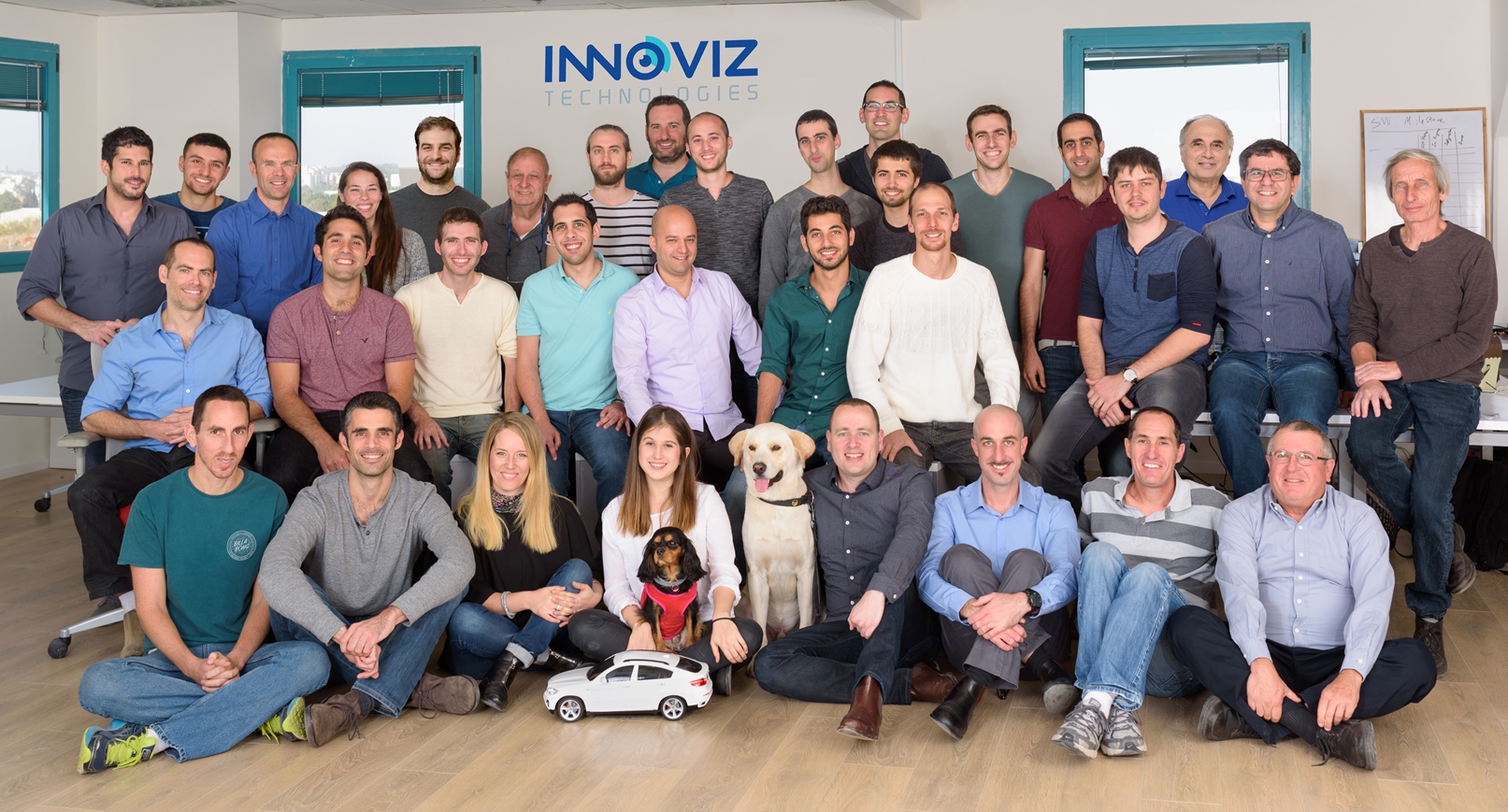
The Innoviz team. Photo: courtesy
  1. Carmakers increasingly look to Israeli expertise to hack-proof their connected and autonomous vehicles. One of the newer players in this field is Karamba Security of Hod Hasharon, whose Carwall ECU security platform meets the goals set out in the US Department of Transportation’s guidelines for the safe deployment of autonomous cars.

DRONES

  1. Airobotics unmanned drone system enables large industrial facilities to collect and view aerial data to monitor, inspect, survey and secure their premises more safely and efficiently. Third parties can use the Petah Tikva-based company’s new developer program to design and develop software for use by the drone platform in next-generation smart factories and industrial IoT facilities.

  1. Businesses, hobbyists and RC enthusiasts in many countries already use drones and drone services from Flytrex Aviation. This year, the Ukrainian postal service began testing Flytrex’s personal delivery Mule. The cloud-controlled octocopter can carry packages weighing up to 3 kilograms (6.6 pounds) as far as 23 kilometers (14.3 miles) at speeds of up to 70kmh (43.5mph) before releasing them at the destination.

Flytrex Mule personal delivery drone flying in Ukraine. Photo via Start-Up Nation Finder
  1. AerialGuard in Or Akiva is developing advanced autonomous navigation systems that help civilian drone manufacturers add capabilities such as sense-and-avoid and intelligent navigation.

DIGITAL HEALTH

  1. Datos Health, a patient-generated health data management company in Tel Aviv, signed a go-to-market agreement to expedite entry of its remote IoT solution in the US early in 2017. Datos automatically manages and validates relevant data from wearables and personal medical devices for clinical decision support without need for a monitoring call center. Four pilot programs in Israel are using Datos to monitor diabetes, high blood pressure, long-term and post-acute care.
  2. Oxitone, based in Kfar Saba, expects to launch sales in 2017 of its wrist-worn pulse oximeter for continuous blood oxygen monitoring to track and manage chronic disease. The platform, connected via Bluetooth to smartphone and cloud, collects data from a pool of sensors and sends alerts to possible complications.
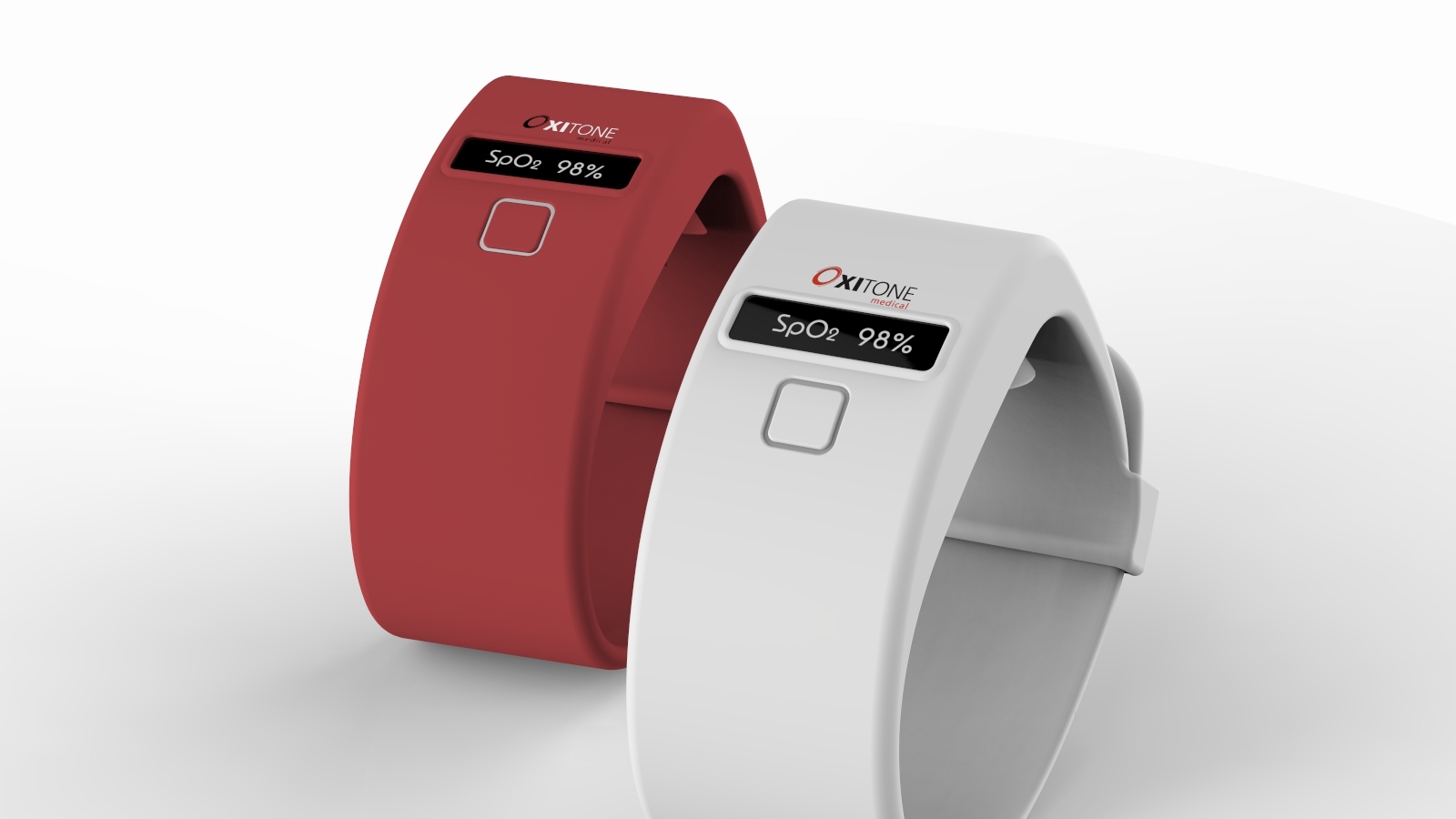
Oxitone’s prototype blood-oxygen monitoring wearable. Photo: courtesy
  1. Tempdrop wearable device tracks changes in a woman’s basal temperature to help predict ovulation. While she sleeps, the device collects thousands of data points on body temperature and motion. When removed, it automatically syncs with any smartphone fertility app. The company, based in Ra’anana, is making its first shipments shortly.
  1. ContinUse Biometrics  is gaining traction in the medical arena for its single-sensor platform that detects nanoscale movements in fully dressed people at any angle, enabling non-contact measurement of heartbeat, blood pressure, breathing pace, glucose level, oxygen saturation and blood-alcohol levels. Newborn intensive care units, sleep labs and telemedicine providers are among those interested in the platform. The first products from this Tel Aviv company are going to market by the second half of 2017.

GREEN TECH

  1. StoreDot’s FlashBattery, which fully charges smartphones in 30 seconds, is heading into mass production in 2017. Using the same environmentally friendly nanomaterials instead of lithium, the Herzliya Pituach-based company is also developing a five-minute electric car chargeand a metal-free color display technology for TV, computer-monitor and mobile-device LCD screens.
  1. An innovative, eco-friendly pooper-scooperfrom Tel Aviv-based Paulee CleanTec will be commercialized in 2017 through a licensing deal with OurPets in the United States. The portable system converts droppings into pathogen-free, odor-free fertilizer granules in less than a minute.
  1. Flux is shipping the first commercial beta units of its Eddy IoT devices for app-controlled, socially connected, home hydroponic gardening using environmental sensing and finely tuned lighting and nutrients. Register on the website to get the final product in spring 2017.Based in Dallas with R&D in Tel Aviv, Flux is the founding member of Mars Farm, an international consortium building the world’s first sustainable farm for outer space.

  1. BrighTap smart water meter from Jerusalem-based BwareIT will launch in US and European markets next March or April, enabling households to monitor water quality and consumption. The device fits onto faucets, pipes or hoses to display water use parameters in real time to increase awareness, and connects to a data website and app to help users analyze results and potential savings. The company is among 10 finalists in the Global Entrepreneurship Networks’ Startup Open contest on January 5.
  1. TSD (Tethys Solar Desalination) of Tel Aviv plans to disrupt the desalination industry with a low-cost, off-grid, scalable and environmentally friendly module using onlysolar power. The first TSD pilot site will be established in Israel by mid-2017, followed by possible pilots in countries including China and the United States.

TSD’s proposed pilot system. Photo: courtesy

MEDICAL DEVICES

  1. CartiHeal of Kfar Saba stands ready to revolutionize cartilage and bone regeneration in knees, ankles and big toes with its Agili-C biodegradable scaffold. Already having European Union CE approval, in 2017 the company will enroll 250 US patients in a multicenter two-year pivotal study toward US Food and Drug Administration (FDA) approval for broad indications including focal cartilage defects and osteoarthritis.
  1. Medasense is soon to receive the CE Mark to begin sales in Europe Union countries of its novel NOL (Nociception Level), a continuous, non-invasive pain-monitoring device. NOL is the first clinically accepted tool to objectively monitor changes in pain level, even when patients cannot describe their pain because they are sedated, demented or too young to talk.
  1. In a world first, Teva and Syqe Medicalannounced an agreement in November to market medical cannabis in Israel via an inhaler — allowing doctors to prescribe an optimal dose of cannabis to alleviate symptoms and minimize psychoactive effects. Keep an eye on Syqe Medical as it transforms cannabis and other botanicals into standard prescription medicines.

FINTECH

  1. Sling equips “micro merchants” (such as flea-market vendors, home businesses, caregivers and tutors) with wristbands, tags, pins and stickers that customers can scan with a smartphone app to make a mobile payment within seconds. Acquired by Brazilian micro-credit company Avante last July, Sling is set for global growth in 2017, particularly in South America, Africa and India.

 Sling enables cashless, credit-card-free payments to micro merchants. Photo: courtesy
Sling enables cashless, credit-card-free payments to micro merchants. Photo: courtesy
  1. TipRanks uses machine learning and natural language processing algorithms to build a dataset of online analysts, hedge-fund managers, financial bloggers and corporate insiders. Available by subscription, the tool helps members choose reliable and accurate financial advice. A mobile app is in the works, according to the Tel Aviv-based company.
  1. Peer-to-peer insurance company Lemonade, founded in 2015 by Israeli executives formerly with Fiverr and Powermat, is disrupting the way New Yorkers buy homeowners and renters insurance. The online and mobile platform, powered by artificial intelligence and behavioral economics, uses bots and machine learning to deliver insurance and handle claims. A flat fee is charged and unclaimed funds are donated to charity. Lemonade will expand to other US states in 2017.

Brazil looks to Israeli tech to solve a stinky problem


By next year, several Brazilian sewage plants will incorporate Lodologic systems to change sludge into odorless, pathogen-free fertilizer for crops.

 APRIL 20, 2017, 6:30 AM
Illustration by Kraftwerk/Shutterstock.com
Ready for a really yucky statistic?

Sixty percent of the 6.8 million liters of daily sewage sludge generated in Brazil gets dumped back into nature untreated. And even that is a big improvement over the situation five years ago.

Now the South American country is poised to clean up its sewage problem using an Israeli invention for transforming human waste into odor-free, sterilized farm fertilizer.

Incorporated in February, Lodologic was established by a group of Brazilian companies in partnership with Paulee CleanTec in Israel. (“Lodo” means “sludge” in Portuguese.)

“Paulee CleanTec has a proprietary process to oxidate organic residue. We’re going to apply that process to sludge,” Lodologic CEO Gabriel Kainuma tells ISRAEL21c from his office in Sao Paulo.

“We mix a chemical reagent with the sludge and blend this mix in a high-speed chamber that eliminates all pathogens in the sludge, transforming it into safe, affordable, effective fertilizer,” he says.

“By 2018 we expect to be operating in at least six plants. There are over 400 sewage treatment plants in Brazil, so we have a huge market here to explore.”

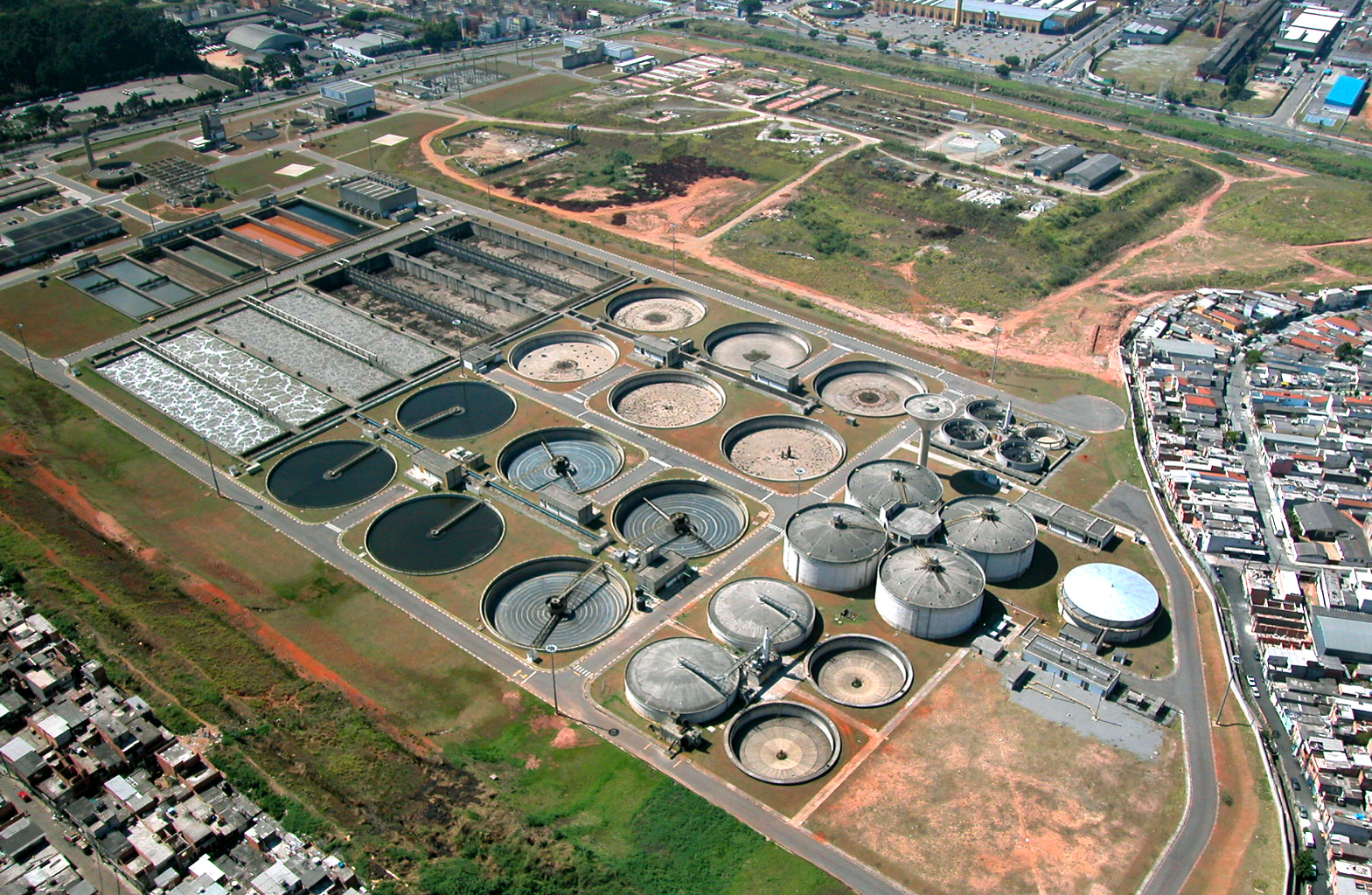
A sewage treatment plant in Brazil. Photo courtesy of Lodologic

Sludge (biosolids) is a byproduct of sewage treatment plants — the waste removed from wastewater. While the treated water can be safely discharged to waterways or reused for other purposes, sludge has to be disposed of or treated separately onsite. An environmentally friendly option is composting, but this takes a lot of time and space. And it smells bad.

“Decades ago, when sewage treatment was only taking its first steps, sludge was dumped into international waters,” Paulee CleanTec CEO Ilan Levy tells ISRAEL21c.

In many Latin American countries, he says, dumping sludge into the ocean still is standard practice, and even happens unintentionally in places such as California when heavy rain causes sewage systems to overflow.

“Nobody knows what to do with the enormous amount of sludge generated every day,” says Levy. “The general solution is to send it to landfills. We are changing the logic by turning sludge into something of value.”

Wastewater treatment in Brazil, where Lodologic is changing the paradigm. Photo: courtesy

One technology, three uses

Paulee CleanTec is the Tel Aviv company that developed an invention by Hebrew University Prof. Oded Shoseyov for turning dog dung into sterile, odorless fertilizer pellets on the spot, using a pooper-scooper with an oxidation unit attached. This innovation is now going into production through a partnership with Ohio-based OurPets.

In 2014, Paulee CleanTec partnered with San Francisco-based CB Engineers to create Epic CleanTec, which will soon install a unique system in a San Francisco high-rise apartment house to treat sewage and use the resulting fertilizer for onsite landscaping. The system will redirect the used water for toilets, irrigation and cooling towers; and will reuse the output heat for the building’s hot-water supply.

Odorless, sterile fertilizer transformed from solid waste. Photo courtesy of Epic CleanTec

Lodologic, Paulee’s second affiliate company, “is a different application, on the municipal level, using totally different machinery,” Levy explains. “Sewage systems are overloaded and new approaches are needed. We need to increase the number of people they can serve. So we attack the problem from different angles.”

Lodologic machinery is designed to convert all types of sludge from sewage treatment plants or biogas plants into odorless, organic, low-cost agricultural fertilizer within minutes.

The Brazilian company, self-financed for now, also will offer its customers a distribution structure for the fertilizer.

“We’re developing equipment to retrofit existing sewage treatment facilities,” says Kainuma. “Usually a conveyor puts the sludge into a truck to take it away. We’re going to position our equipment to receive the sludge from the conveyor in the same place where the truck would have been. So there is very little modification needed to the plant.”

The first operation is expected to go live by the end of 2017.

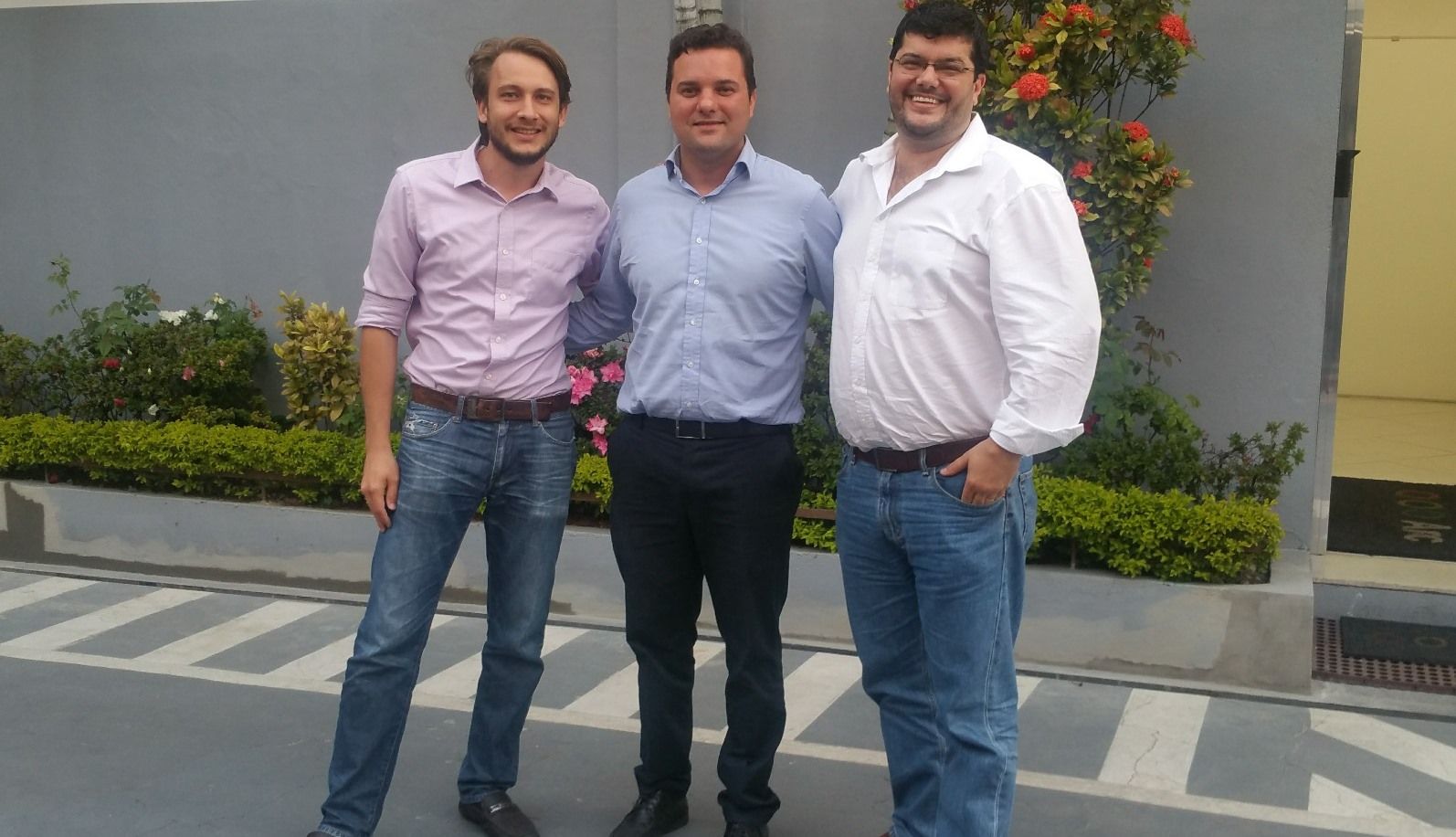
Lodologic’s team in Sao Paulo, from left, Gabriel Kainuma, Plinio Pimentel and Ayrton Junior. Photo: courtesy

“We have a team of four and are hiring more to accelerate development,” says Kainuma, a Brazilian robotics engineer who formerly worked in the automotive industry.

Other countries are likely to be watching the project in Brazil closely. While Brazil produces 2.5 million tons of sludge per year, the amounts are much higher in countries such as China (9 million tons per year) and the United States (8 million tons). The European Union generates about 12 million tons of sludge every year.

« Musée de l'Histoire des Juifs polonais, Varsovie », par Ute Hoffarth

Arte diffusera le 23 avril 2017 Aventure au musée. Musée de l'Histoire des Juifs polonais, Varsovie (Abenteuer Museum. Museum der Geschichte der polnischen Juden, Warschau), documentaire de Ute Hoffarth. Un musée retraçant dans une scénographie intéressante l'histoire millénaire des Juifs en Pologne et inauguré en 2013.


Avant la Deuxième Guerre mondiale, la moitié de la population juive mondiale habitait en Pologne.

La Shoah a tragiquement marqué l’histoire des Juifs polonais, tout en occultant le passé millénaire des Juifs de ce pays.

En 1995, naît l’idée d’édifier un musée rappelant une histoire ancienne, qui ne saurait se réduire à celle des shtetls (petites villes, en yiddish). Des efforts importants sont nécessaires pour réunir les ressources financières auprès de généreux bienfaiteurs et d’institutions publiques.

« Conçu par l’architecte finlandais Rainer Mahlamäki et inauguré en 2013, le musée de l'Histoire des juifs polonais  s’élève au cœur de ce qui fut le quartier juif de Varsovie, puis, de 1940 à 1943, sous l'occupation nazie, le ghetto ». En 2010, la responsable des expositions avait souligné qu’il s’agirait du musée d’histoire des Juifs de Pologne, désormais appelé musée POLIN.

« C’est cette histoire et cette culture que le musée veut rendre palpables, à travers ses collections, mais aussi des expositions, des films, des débats, des spectacles ».

« Avec, entre autres, sa conservatrice Barbara Kirshenblatt-Gimblett, cet épisode de la série documentaire Aventure au musée explore le lieu et le quartier qui l'entoure ».


2016, 53 min
Sur Arte le 23 avril 2017 à 18 h 05

Visuels : © SWR
Le présentateur Gustav Hofer Malgorzata Szumowska sur les traces de la vie des juifs à Varsovie, dans un cimetière juif
Le présentateur Gustav Hofer avec la conservatrice du muséeBarbara Kirshenblatt-Gimblett, dans la synagogue ornée de bois et richement décorée, qui a été construite dans le musée de l'Histoire des Juifs polonais à Varsovie
Le bâtiment de l'architecte finlandais Rainer Mahlamäki exprime le symbolisme du musée de l'Histoire des Juifs polonais comme celui de la vie.

UK breaks with EU at U.N., changes stance on Israel, adopts UN Watch statistics

In an unprecedented move, Prime Minister Theresa May’s government changed the UK’s vote on Friday at the U.N. Human Rights Council on what it rightly called a “perverse” resolution condemning Israel for allegedly maltreating the Druze residents of the Golan Heights — and London warned that it would oppose all UNHRC resolutions on Israel if the UNHRC’s bias does not stop.

In past votes on the same text — introduced annually by Syria’s Assad regime, and more recently by the Islamic group acting as a surrogate — the UK had abstained, together with EU states.

This time, however, the UK joined the U.S. in voting No, in what experts say is a move by London to closely align itself with Washington. Brexit is about to begin and the UK increasingly needs to rely on close ties with America.

More significantly, the UK also declared on Friday that if the UNHRC doesn’t change its anti-Israel bias, they will begin to vote No on all five of the annual resolutions concerning Israel.

“Today we are putting the Human Rights Council on notice. If things do not change, in the future we will adopt a policy of voting against all resolutions concerning Israel’s conduct…”

To explain their new principled approach, the UK adopted UN Watch’s statistics showing the council’s bias, instead of numbers put out by the council’s champions which, in order to downplay the UNHRC’s bigotry, dilute the figures by wrongly conflating consequential resolutions that condemn countries with toothless texts that praise countries.

Here is the full written statement put out by the UK, in which it noted that the UNHRC’s resolutions on Israel failed to address Palestinian terrorism or glorification of terrorism:

But we must also recognise the continuing terrorism, incitement and violence that Israel faces. According to the Quartet’s report last year, there were 250 terrorist attacks, leading to the deaths of at least 30 Israelis. Renewed Hamas efforts to rebuild their tunnels are a grave concern. The scourge of anti-Semitic incitement and glorification of terrorism continue. And for as long as terrorists are treated as martyrs, peace will prove distant.

That is why we continue to call on all parties to act in accordance with international law. And that is why we supported UN Security Council Resolution 2334, which tackles both settlements and terror alike.

And yet neither “terrorism” nor “incitement” were a focus of this week’s Council discussions and resolutions. This is not acceptable.

The UK statement went on to address the overall UNHRC bias against Israel—and adopted UN Watch’s statistics (as opposed to those of council defenders and apologists which wrongly conflate UNHRC country condemnation with resolutions that praise the country concerned.)

Our enduring commitment to the universality of rights is also our source of enduring disappointment with the Council’s bias against Israel. Israel is a population of eight million in a world of seven billion. Yet since its foundation, the Human Rights Council has adopted 135 country-specific resolutions; 68 of which against Israel. Justice is blind and impartial. This selective focus on Israel is neither.

Israel is the only country permanently on the Human Rights Council’s agenda. Indeed when the Council voted to include Israel as a permanent item in 2007 – the so-called agenda Item 7 – it was Ban Ki Moon who expressed his deep disappointment “given the range and scope of allegations of human rights violations throughout the world.”

In an unprecedented move, the UK changed its vote from abstain to oppose on the Golan Heights resolution, saying that it sent a “perverse” message:

Nowhere is the disproportionate focus on Israel starker and more absurd than in the case of today’s resolution on the occupation of Syria’s Golan. Syria’s regime butchers and murders its people on a daily basis. But it is not Syria that is a permanent standing item on the Council’s agenda; it is Israel. Ten years have passed since Item 7 was instituted, and there has been no sign of change. Whilst we are unswerving in our conviction that the Golan Heights are occupied and do not recognise Israel’s annexation, we cannot accept the perverse message sent out by a Syria Golan resolution that singles out Israel, as Asad continues to slaughter the Syrian people. So we have voted against the Golan resolution.

Finally, the UK put the UNHRC “on notice,” announcing that if the “unacceptable pattern of bias” does not stop, the UK will adopt a policy of voting against all resolutions on Israel:

Ultimately peace is built, brick by brick, through trust and goodwill on all sides. Human rights violations break down that trust. And so it is incumbent on Palestinians and Israelis alike to abide by International Human Rights Law. But by continuing an unacceptable pattern of bias through Item 7, the Council discredits its necessary voice, hardening positions on both sides. For as long as the Human Rights Council continues down this disproportionate and biased path, it will make the achievement of a negotiated two-state solution harder not easier.

So today we are putting the Human Rights Council on notice. If things do not change, in the future we will adopt a policy of voting against all resolutions concerning Israel’s conduct in the Occupied Syrian and Palestinian Territories.

Commentary: 25 Years On, India-Israel Partnership Intensifies in Atlanta

Two ancient civilizations, two post-colonial states, two democracies, two centers of culture and faith, two nations with vibrant global diasporas: It was only natural that India and Israel would forge not only diplomatic relations, but a unique and enduring partnership. 

Now, 25 years after Delhi and Jerusalem launched formal ties, we can see the impressive contours of the evolving Indo-Israeli alliance and project even greater mutual benefit in the years to come.

Join Global Atlanta for a luncheon discussion with Amb. Shorer next Tuesday, April 25.

At the local level, this natural bilateral collaboration has intensified in the last few months, partly to the friendship between the countries’ dynamic diplomats covering the Southeast U.S.: Israeli Consul General Judith Varnai Shorer and her Indian counterpart, Nagesh Singh

In December, Mr. Singh graciously hosted a Hanukkah celebration at the magnificent Indian consulate general building in Sandy Springs. In February, he joined a panel with Conexx – American-Israel Business Connector President Guy Tessler on how both India and Israel are driving forward the South’s technology renaissance through investment and innovation.

Next week will bring another importantmilestone in the India-Israel relationship here in Atlanta. 

On April 24, the American Jewish Committee (AJC), both consulates and the Asian American Heritage Foundation will partner to launch the first India-Israel U.S. Forum, an exploration of the countries’ investment and trade links with the Southeast U.S.

All these fruits are the result of a generation of labor by leaders of both nations to bring them closer together. It took decades for India and Israel to graduate from informal and consular ties, begun shortly after both countries achieved independence, to an exchange of ambassadors and an acknowledgement that open collaboration would be beneficial. 

But after that line was crossed by Prime Minister Narasimha Rao on Jan. 29, 1992, Indians and Israelis made up for the lost time. In July, we will witness the first visit of an Indian Prime Minister, Narenda Modi, to Israel.

Consul General Nagesh Singh. Photo by ByteGraph.

Over a quarter-century, through governments of the right and left in both countries, the relationship has grown. Today, with an embassy inNew Delhi and consulates inMumbai andBengaluru, Israel has demonstrated its commitment to exploring varied avenues for deepening ties.

Israel operates an expansive network of agricultural technology “centers of excellence” engaged in training programs for farmers across India. And Israeli firms are announcing investments, joint ventures and contracts with stunning regularity.

On his visit to India last November, Israeli President Reuven Rivlin expressed the hopes and intentions harbored by so many of his countrymen, alluding to Mr. Modi’s plan to upgrade India’s manufacturing base.  

“India is a top trade partner for Israel. We have come here today to send a strong message: We are here to make in India, to make with India. We are here to grow our economies together in full partnership for the benefit of all of us.”

Since 1992, trade has increased more than 20-fold to close to $6 billion, coupled with combined tourism growing to some 90,000 visitors a year and vast increases in academic, scientific and cultural exchanges.

Indians and Jews are natural friends and allies. One sees this in the United States, where AJC has developed the closest possible links with leaders of the Indian-American community, establishing political, fraternal and business connections, and advocating together for strengthened U.S.-India strategic cooperation (including the landmark Civil Nuclear Agreement of 2008), and standing together against U.S. military assistance to terrorist-supporting states.

For more than 30 years, AJC has brought helped to bring together leaders from Atlanta’s Jewish and Indian communities. Sometimes formally through an Indo-Jewish Dialogue or visits to Israel on AJC’s Project Interchange, and sometimes informally through personal relationships in politics, business and professional organizations.  

With collaboration like what we’re witnessing locally, we can only expect that Indo-Israel, Indo-Jewish ties will become stronger and more important.

Learn more about the April 24 forum here.

Dov Wilker is the regional director for the American Jewish Committee in Atlanta. 

Despite Warning, Israeli Tour Group Set to Leave for North Korea

A man watches file footage of a North Korean ballistic missile at Seoul Railway Station in Seoul, South Korea, on Sunday. (AP Photo/Ahn Young-joon)

YERUSHALAYIM - Despite a government-issued travel warning, an Israeli tour operator plans to continue bringing groups to North Korea.

“People are old enough to decide whether or not they are prepared to handle the political tension involved,” Chaim Peres of the Tarbuto travel agency told Channel Ten. “The statement issued by the Foreign Ministry was not a warning against travel due to the possibility of terror attacks, as in the warning it issued on travel to Sinai, but a note of caution that travelers needed to be aware of.”

Tarbuto was selected in February by the North Korean government to arrange for tours to the country. The operator will be empowered to issue visas to Israeli citizens who wish to visit North Korea, subject to the approval of the Pyongyang government. The agency has organized its first group, which is set to leave for North Korea in the coming days.

North Korea is the ultimate destination for well-traveled Israelis, Peres said. “North Korea is one of the most fascinating destinations in the world today. It is a country almost completely closed off to the rest of the world and cut off even from its neighbors… full of mystery.” Israelis have been able to enter the country only via visas issued in China; but as a result of this agreement, the North Korean government tourist agency, KISTC, will approve visas issued directly to Israelis. There are no direct flights, however, and all travel to and from the country will be via China.

In its warning, the Foreign Ministry stressed that travelers needed to be aware of the “increase in tensions in the region,” as rhetoric between the United States and North Korea heats up. While individual travelers are free to do as they like, they should be aware that Israel has no relations with North Korea — and in the event of a problem, Israelis should not expect any help from their government.

Peres is not concerned; North Korea is a safe destination, and in fact it appears as such on the Foreign Ministry’s maps. “North Korea has one of the lowest levels of personal crime in the world, and tourists there feel very safe,” he said. “Israelis who have been there in recent weeks have reported that the tension is not felt by them, and that the government is ensuring their safety. The vast majority of North Koreans are going about their daily business, partly because they are unaware of the ‘tension,’ as they generally do not have access to online news or outside broadcasts.”

« François Fillon, tenez bon ! » : la lettre d’un Israélien francophile à la France

enseignant à l’Universite de Tel-Aviv et au Centre interdisciplinaire de Herzliya, Senior Fellow au Forum Kohelet, et analyste pour la chaine i24news. Il explique pourquoi il soutient François Fillon. 

Il aura fallu beaucoup de colère froide pour me pousser dans l’arène de l’élection présidentielle française (qui me regarde peu) et pour me faire prendre la parole dans un journal français (chose que je fais rarement). En tant qu’Israélien, j’ai l’habitude des sermons proférés à mon pays. L’amitié, nous dit-on, justifie la franchise. Soit, mais que cela fût réciproque: c’est donc en ami de la France que je vous donnerai mon avis franc sur votre campagne électorale.

Israélien par choix, je ne vote pas aux élections françaises car je trouve anormal d’exercer un droit sans remplir de devoirs (tels que le paiement d’impôts). C’est entre autres par respect du modèle républicain français («tout accorder aux Juifs comme individus, rien en tant que nation» avait dit Clermont-Tonnerre) que je fis mon choix dans ma jeunesse: celui de prendre part à la renaissance nationale du peuple juif. Mais rien ne saurait taire mon opinion, ni mon admiration pour la culture politique française (oui, elle existe) que j’acquis jadis sur les bancs de Sciences-Po.

Or que reste-t-il de cette culture politique lorsque le «débat» se réduit à éliminer, de façon ciblée et coordonnée, le seul candidat sérieux et crédible? François Fillon a le programme et la carrure pour redresser la France, et le voici disqualifié par des médias, des intellectuels et des magistrats qui font un usage sélectif de la présomption d’innocence. Aux pudiques gazelles (pour reprendre l’expression de Jean-Luc Mélenchon) qui jurent de l’irréprochabilité de tous les magistrats, faut-il rappeler le «mur des cons»? Aux saintes-nitouches qui raillent ceux qui oseraient mettre en cause François Hollande, faut-il révéler l’existence du livre Bienvenue Place Beauvau?

Vu de loin, on a du mal à comprendre ce qui pousserait les Français à confier la fonction suprême de l’État à un jeune homme stendhalien, sorte de Julien Sorel reconverti au marketing politique.

Vu de loin, on a du mal à comprendre ce qui pousserait les Français à confier la fonction suprême de l’État à un jeune homme stendhalien, sorte de Julien Sorel reconverti au marketing politique et dont la flûte creuse enchante tant les électeurs crédules que les politiciens ambitieux alléchés par des sondages prometteurs. Car Emmanuel Macron, c’est la continuation de François Hollande par d’autres moyens et par tous les moyens. L’ancien conseiller et ministre du Président socialiste a l’affront de faire croire qu’il est là pour tourner la page d’un échec qui est également le sien. Le soutien de Daniel Cohn-Bendit avait-il pour but de nous remémorer l’expression «élections piège à cons»? En marche, moutons de Panurge!

Marine Le Pen, quant à elle, livrera à l’Allemagne les clefs de l’Europe. Car une Union européenne sans le France (et sans la Grande-Bretagne), ce sera une Europe dominée par l’Allemagne. La France conçut la CECA en 1951 pour lier la puissance industrielle allemande à l’Europe, et la France conçut l’Euro en 1991 pour partager avec l’Allemagne unie son pouvoir monétaire. Si l’Allemagne est devenue de facto l’arbitre des politiques monétaire et fiscale en Europe, c’est parce que la France a pris du retard économique en repoussant les réformes nécessaires. Marine Le Pen accuse l’Europe. Mais ce n’est pas à cause de l’Europe que la France a un déficit budgétaire depuis 1974; qu’elle est l’une des plus grosses dépensières de l’OCDE; que son code du travail plus long que la Bible dissuade l’emploi; que sa fiscalité punitive décourage les investisseurs; et que son surendettement inquiète à juste titre les marchés financiers.

François Fillon est le seul à reconnaître ces problèmes réels et à leur apporter des solutions crédibles. Ceux qui ont cherché à l’éliminer ont mis leurs haines et leurs ambitions personnelles avant l’intérêt de la France. J’ose espérer qu’ils échoueront.

J’aime trop la France pour être indifférent à son déclin.

D’aucuns me demanderont en quoi cela m’importe et me regarde. J’aime trop la France pour être indifférent à son déclin. Je connais assez l’Histoire pour craindre une Europe dominée par l’Allemagne. Je comprends suffisamment la politique pour identifier les candidats frauduleux et les manipulations médiatiques. Le combat de François Fillon n’est pas que celui de la France: c’est l’avenir de l’Europe et de la démocratie qui sont en jeu. La France est un grand pays et doit le rester pour garantir l’équilibre des forces en Europe, pour lutter contre l’État islamique, et pour veiller au strict respect de l’accord nucléaire avec l’Iran.

En tant qu’Israélien qui s’efforce d’écouter les critiques françaises lorsqu’elles sont honnêtes et fondées, je sais ce qu’un regard extérieur peut avoir d’utile. À mon tour, donc, de me permettre de proférer des conseils aux Français: résistez aux sirènes médiatiques, et ne ratez pas l’occasion de redresser votre pays. Et à François Fillon: tenez bon.