I am not an historian, decent author or a journalist, and the chances are that unless there is a link or reference to somewhere else, the perpetrator is yours truly – Renaud Sarda. I created this blog as a focal point, to arm people with arguments and facts that they can perhaps use to counter biased media reporting and anti-Israel propaganda, and to help counter (BDS) campaign. I am a Zionist/Sephardi/Jew who will fly the Israeli flag, and defend whatever Israel does.
Search This Blog
Thursday, 17 August 2017
BHL discovers Baghdad-Jewish war hero
It’s quite a story.
This story may seem unlikely in this era of generalized war between cultures, civilizations, and religions. And I am grateful to British journalist Ben Judah for having brought it to light in an article that appeared in the Jewish Chronicle the day after the visit to Israel of Indian Prime Minister Narendra Modi.
The time is December 1971. The place is the territory then known as East Pakistan. Separated by 1,600 kilometers from West Pakistan, this Bengali part of Pakistan has been in rebellion since March.
The central government in Islamabad, rejecting the secession of what will eventually become Bangladesh, is engaged in a merciless repression, the cost of which, in lives, remains unknown even today, almost a half-century later. Half a million people may have died, of perhaps a million, 2 million, or more.
On Dec. 3, India decides to enter the conflict, to “interfere,” as one would put it today, in the domestic affairs of its neighbor so as to stop the bloodbath. The fighting rages.
The Bengali freedom fighters, known as the Mukti Bahini, now supported by India, become increasingly daring.
New Delhi’s strategy is to build up slowly and gradually, a decision. This strategy seems to many ill-suited to the Bangladesh of the day, a terrain of few roads, major rivers, and innumerable marshes. Thirteen days into the new phase of the war, with the Pakistanis having massed 90,000 troops around Dacca, the capital, against the Indians’ 3,000, New Delhi appears to be stuck and has hardly boxed itself into the beginnings of a siege. And it is at this moment that a high-ranking Indian officer, without notifying his superiors, takes a plane, lands in Dacca, presents himself to General Niazi, head of the Pakistani forces and pulls off one of the most spectacular bluffs in modern military history: “You have 90,000 men,” the Indian officer tells Niazi. “We have many more, plus the Mukti Bahini, who are full of the vengeance of their people and will give no quarter. Under the circumstances, you have only one choice: to persist in a fight that you cannot win or to sign this letter of surrender that I have drafted in my own hand, which promises you an honorable retreat. You have half an hour to decide; I’ll go have a smoke.”
Niazi, falling into the trap, chooses the second option. To the world’s amazement, 3,000 Indian soldiers accept the surrender of 90,000 Pakistanis. Tens of thousands—no—hundreds of thousands of lives on both sides are spared.
And Bangladesh is free!
The story might have ended there.
Except that the general behind the masterly coup that makes him godfather to a new Muslim country is Jewish. His name is Jack Jacobs.
Read article in full
Wednesday, 5 July 2017
UK synagogue membership at lowest since ’90
(JTA) — The United Kingdom has the largest number of synagogues in its history, but membership in those institutions is at its lowest in decades, according to a newly published report.
In its report titled “Synagogue membership in the United Kingdom in 2016,” the Institute for Jewish Policy Research counted 454 Jewish houses of worship with a combined membership of fewer than 80,000 households.
The report, which was published Tuesday, reveals that 79,597 Jewish households across the United Kingdom held synagogue membership in 2016, down from 99,763 in 1990 — a 20 percent decline over a quarter of a century.
According to the authors, the decline is only partially related to assimilation and can be explained primarily by demographic forces – a general decline in the number of Jewish households that exist in the United Kingdom.
In the United Kingdom, where approximately 250,000 Jews live, many synagogues employ a membership system in which worshippers who pray there regularly pay fees for activities and maintenance.
Orthodox synagogues had the largest membership at 53 percent, the report said, down from 66 percent in 1990. Reform and Liberal shares, at 19 and 8 percent in 2016, have slightly increased over that period.
“The affiliated British Jewish community is changing. The mainstream Orthodox center is in numerical decline, whilst stricter forms of Orthodoxy are in the ascendancy,” Jonathan Boyd, the executive director of the Institute for Jewish Policy Research, said in a statement about the report. “Because the more progressive wing is largely stable, representing just under a third of the total, the trends point to a future in which stricter forms of Orthodoxy will hold an increasingly prominent position, not only in synagogue membership, but in how Judaism is practiced and how Judaism is seen and understood by others.”
Three-quarters of the U.K. synagogues are in Greater London and the adjacent areas of South Hertfordshire and South-West Essex, and 11 percent are in Greater Manchester. Half of all synagogue members belong to synagogues that are situated in just five areas in the London area: Barnet, Westminster, Hertsmere, Redbridge and Stamford Hill.
Tuesday, 4 July 2017
Libyan Jews and Arabs meet in Greece
Delegates from Israel, Libya and the Libyan-Jewish diaspora participated in the conference.
The meeting will last for three days, according to media sources.
Another official from the National Salvation Government of Khalifa Al-Ghweil, which is a rial government formed by the General National Congress, attended the meeting and vowed to help facilitate the return of and reconciliation with the Libyan Jews.
The President of the (UK-based) Union of Jews of Libya, Raphael Luzon, said before the beginning of the meeting that it will be a very significant step for Libyan reconciliation efforts and will include many Libyan figures.
Read article in full
Kurdish director of Jewish affairs 'not trusted'
Nash Didan, a short film by a young Israeli about her Kurdish grandmother (with thanks: Michelle)
In Iraqi Kurdistan, which prides itself as a bastion of tolerance in the region, and which will vote in an independence referendum in September, a higher, yet debated, number reside. As many have converted to Islam and Christianity over the years and others pose as Christians and Muslims, statistics are unclear and call into question what defines a "Jew". Mordechai Zaken, historian and former adviser to Israeli Prime Minister Benjamin Netanyahu, has said that most of the several dozen families that had some distant family connection to Judaism immigrated to Israel in the aftermath of the Gulf War.
"Most of these people are Muslim Kurds who perhaps have a grandmother or great grandmother of Jewish origin who converted to Islam two or three generations ago," he told the Jerusalem Post. Decades into life without a Jewish support system - synagogues, rabbis, collective holiday celebrations - the once flourishing sense of Jewish community has faded. Additionally, incidents reminding Jews to proceed with caution have not been consigned to the 20th century. In 2012, Mawlud Afand, the publisher of the now discontinued Israel-Kurd magazine, which one Sulaimaniya man remembers buying covertly "like [he] was buying cocaine," was kidnapped and imprisoned in Iran after repeated warnings to cease publication, according to those close to him. He was released in 2015.
A seemingly progressive development came in 2015 when the Kurdish Regional Government (KRG) passed the Law of Minorities, which gave a handful of minority religions - Zoroastrianism, Yarsanism and Judaism among others - the right to official representatives in the KRG through the Ministry of Endowment and Religious Affairs. The Jewish representative appointed by the KRG was Sherzad Mamsani, a man who says he lost his right hand in a 1997 bombing in which he says he was targeted for his faith. Among his goals, he said, is the restoration of the region's Jewish historical sites, erection of synagogues, and the carrying out of a public relations effort to improve the perception of Jews. One Kurdish Jew, who did not want to give his name, remembers vividly his father's reaction when he first heard the news of Mamsani’s appointment. "My father was so happy, he cried at the first mention of a Jewish representative," he said.
But two years into his post, Mamsani has struggled with his own image in Jewish communities. Just months after his appointment, Zaken told the Jerusalem Post that Mamsani was "someone who does not distinguish between truth and lies in his eagerness," adding that his "publicity campaign" is "causing confusion" and "damaging the KRG". Zaken, the author of Jewish Subjects and Their Tribal Chieftains in Kurdistan, accused Mamsani of inflating the number of Jews in Kurdistan for political gain.
Most recently, Mamsani has controversially undertaken a mission to conduct a census of Jewish families in the region by aggregating documents, an initiative he once described in a 2016 Times of Israel interview as "insanity" and an idea that would let "enemies find us and kill us little by little". "Information can be bought in Iraq," worries one Jewish man with his information, given over by a family member, now on file. While some families have cooperated, others have balked at what they see as a double standard initiated by a leader who claims to have, but has not proved to have, Jewish roots and official connections.
KRG's Director of Relations and Religious Coexistence, Mariwan Naqshbandy, confirmed to MEE that Mamsani was granted his post, which is unpaid, without presenting paperwork or community input, but simply after putting himself forward for the role. One Jew who has met Mamsani, speaking on behalf of his family, said: "We didn't turn over paperwork. I haven't seen good or bad things yet - I just don't trust him.
"Lots of Jewish people are asking who he is. They don't want to show their documents. They want proof [of who he is] before coming out." But confirmation won't be coming from what many believe to be the most validating source: Israel.
"Sherzad is not an Israeli citizen, has no [sic] an Israeli passport and has no connection to the Israeli government or any official standing in Israel," Margalit Vega, the director of Israel's Gulf States Department at the Foreign Ministry, wrote in an email to MEE. Earlier this year, Mamsani temporarily stood down for what he called "some reasons," and he himself admits to having many critics.
"Most of my community [is] anti-Sherzad," said Mamsani, who repeatedly stresses that he's not a politician. The Jewish representative seems to be most favourably viewed on foreign trips and in external publications, where he is painted as a brave champion for religious minorities who, as Mamsani puts it, "stands in the centre of the fire among radical Islamic countries".
Read article in full
French Jews enraged that killer might not stand trial
Halimi, who was 66 at the time she was murdered, served as a teacher for many years at a Jewish school in Paris. A Muslim attacker stabbed her, then threw her from her third story apartment to her death.
The judges on the court asserted this week that the murderer’s lawyers had brought conclusive proof that he suffers from mental illness and was not thinking clearly when he committed the cruel murder; therefore, it is possible that he may even be released without going through legal proceedings. They said that it is possible that he didn’t even intend to kill her when he attacked her.
The Jewish community in France intends to appeal the decision when it is officially announced, and is demanding that the court relate to the act as murder with nationalistic intent and not as was asserted. A representative of Halimi’s family said that the act was a terror attack, and blamed police for trying to cover up the murder.
Read article in full
The issue of Traore’s motives was front and center during a recent panel discussion on the popular weekend TV talk show “On n’est pas couché” (“We’re not lying (down)”). (With thanks: Janet)
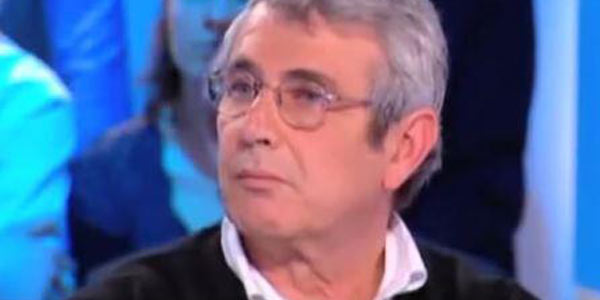
Michel Boujenah: murderer was a crazy antisemite
The main guest was Michel Boujenah, a French Jewish actor and writer, who engaged in a sometimes emotional examination of Halimi’s murder with three other panelists and the show’s presenter, Laurent Ruquier.
On the subject of Traore, Halimi’s killer, Boujenah told the audience: “They said it was a mentally unstable person. But it was a mentally unstable person who chose his victim, who tortured her, insulted her with every antisemitic slur, and threw her out of the window.”
Boujenah, who was born in Tunis, continued: “He was crazy. But he was a crazy antisemite. There is no doubt about this question.”
Read article in full (Algemeiner)
Police blocked neighbours in Halimi case
Saturday, 1 July 2017
Michel Boujenah, victime d’une campagne de boycott en Tunisie
La programmation de l’humoriste et acteur tunisien de confession juive Michel Boujenah à la 53ème édition du Festival de Carthage n’a manifestement pas plu à tout le monde.
Les appels au boycott, voire d’annulation du spectacle de Boujenah se sont multipliés sur les réseaux sociaux, en raison des « positions pro-sionistes et pro-Israël adoptées par l’artiste ».
« Nous ne voulons pas de sionistes, quelque soit leur nationalité, sur nos scènes et dans nos festivals ! »
Une lettre ouverte adressée au ministre de la Culture et au Directeur du festival de Carthage, a été rédigée par la filiale tunisienne de la campagne internationale « Boycott, désinvestissement et sanctions », dans laquelle les raisons derrière les appels d’annulation du spectacle sont expliquées.
« Michel Boujenah est connu comme l’une des plus grandes figures franco-tunisiennes sionistes qui ont toujours défendu Israël, ses guerres et son armée (surtout dans les médias français). Il se dit haut et fort et fièrement sioniste (dans diverses déclarations, dont celles publiées le 5 février 2013, sur JSS News), et ne cache pas sa loyauté envers Israël, où il avait présenté plusieurs spectacles (d’ailleurs, il se prépare à présenter le même spectacle programmé au festival de Carthage, à Tel Aviv le 25 juillet).
[…] Non seulement le comédien exprime cette admiration, mais il se considère aussi comme une partie du « peuple israélien ». Il considère également les criminels de guerre Ariel Sharon et Yitzhak Rabin comme les « plus grandes figures de paix » (dans une déclaration qui remonte à 2010, sur le site SVP Israël) », peut-on lire dans la lettre.
Les signataires ajoutent que le pouvoir politique tunisien doit assumer ses responsabilités quant à la poursuite de ces activités de normalisation, et l’ignorance de nos positions historiques de soutien inconditionnel au peuple palestinien.
Des « pour » et des « contre »…
La campagne contre le spectacle de Boujenah à Carthage a été soutenue et appréciée par des centaines d’internautes tunisiens, qui ont considéré unanimement que l’humoriste ne doit pas monter sur la scène de Carthage.
D’autres, par contre, se sont dits surpris de voir un tel acharnement contre Michel Boujenah, lui qui à toute occasion, fait la promotion de la Tunisie partout où il va.
Yamina Thabet, présidente de l’Association Tunisienne de Soutien des Minorités (ATSM), a dénoncé un « comportement lâche » et un « acte anti-juif ».
« L’appel à boycotter le spectacle de Boujnah , sous prétexte de lutte contre le sionisme , n’est rien de plus qu’un acte anti-juif quand on sait qu’il s’agit d’un Tunisien qui a toujours crié haut et fort son attachement au pays…
Je ne suis pas là pour défendre une personne qui de toute façon n’en a pas besoin, ni pour servir un discours mielleux sur la nostalgie et l’attachement au pays comme si le fait d’être d’une confession autre que musulmane nécessitait de faire ses preuves ! Ce que je dénonce, c’est ce comportement, disons le, lâche de ceux qui faute d’avoir des gonades pour reconnaître leur haine se cachent sous les jupons d’une excuse passe-partout », a-t-elle indiqué.
Va-t-on observer le même scénario Gad Elmaleh au Liban ?
« Suite aux différentes manifestations d’hostilité et appels au boycott à l’encontre de la venue de M. Gad Elmaleh, c’est avec regret que nous nous voyons contraints d’annuler la participation de l’artiste au festival de Beiteddine, considérant que ces éléments pourraient mettre en danger la sécurité de l’artiste et entraver le bon déroulement des spectacles », avait annoncé son agent M. Gilbert Coullier.
La pression de la société civile aura-t-elle le même effet sur la présence de Boujenah à Carthage ? Ou l’humoriste présentera quand même son spectacle, tout comme Gad Elmaleh en 2007 à Carthage, sous se soucier de la polémique ? Seul le temps le dira !
Read more at http://jforum.fr/michel-boujenah-victime-dune-campagne-de-boycott-en-tunisie.html#LZI8v4vo9Sp5dJvt.99
Tunisians urge boycott of 'Zionist' Boujenah
Michel Boujenah: born in Tunis
In an open letter addressed to the minister of culture and festival director, the boycotters, from the Tunisian branch of the BDS movement, claim that Boujenah, who was born in Tunisia but lives in France, is not only a proud Zionist but also considers himself part of the 'Israeli people'.
The signatories call on the Tunisian government to assume its responsibilities vis-a-vis 'normalisation' and reaffirm the country's historical, unconditional support for the Palestinian people.
Tunisian social media surfers are evenly divided on the issue. Hundreds think that his apearance on the stage at Carthage should be cancelled. Others are surprised at the fierce reaction against Michel Boujenah. Yamina Thabet of the Tunisian Association for the Support of Minorities (ATSM) denounced the campaign against the comic as 'bullying behaviour' and 'antisemitic'.
Boujenah is scheduled to perform in Israel on 25 July.
Enrico Macias, the pro-Israel Algerian born singer, cancelled several planned visits to his country of birth after fierce popular protests.