Search This Blog

Wednesday, 7 March 2018

Macron Meets French Jewish Group Amid Anti-Semitism Concerns


FILE - French President Emmanuel Macron delivers his New Year address to the press at the Elysee Palace in Paris, Jan. 3, 2018.
FILE - French President Emmanuel Macron delivers his New Year address to the press at the Elysee Palace in Paris, Jan. 3, 2018. 

A heated debate that has split French intellectual circles over whether to publish anti-Semitic pamphlets of a renowned writer will reach French President Emmanuel Macron when he addresses a leading Jewish group Wednesday.
Macron will be the guest of honor at Wednesday's annual dinner by the group CRIF, whose leaders plan to question the president about fighting anti-Semitism online and recent attacks on French Jews or Jewish sites.
Macron has pledged to fight persistent anti-Semitism in France, which has the largest Jewish community in the world after Israel and the United States.
Leaders of the French Jewish community also want to take advantage of the president's presence and media coverage of Wednesday's dinner to call broader attention to a controversy that has inflamed the French publishing, cultural and academic circles for three months.
Gallimard, one of the largest, most influential and most prestigious French publishing houses, said in December it planned to republish a series of three fiercely anti-Semitic lampoons written between 1937 and 1941 by noted French writer Louis-Ferdinand Celine, for the first time since World War II.
Born Louis Ferdinand Destouches, Celine opposed reprinting them until his death in 1961. Celine was convicted as a collaborator and declared a national disgrace in France after the war, before being granted amnesty.
The writer is best known for "Journey to the End of the Night," his much-acclaimed 1932 first novel written in a groundbreaking style, still frequently studied by French high school students.
A heated controversy erupted in literary circles over the publication, between those who advocate total freedom of speech and those who warn against the dangers of such texts in the context of rising anti-Semitism.
Antoine Gallimard, president of the publishing house, recently decided to suspend publication, while insisting he hasn't given up on the project.
Proponents of reprinting argue that the texts already are easily accessible on the internet, that it is preferable that they be published with historical comments explaining their danger, and that this would no longer hide the darkest face of the writer.
Opponents note that anti-Semitism is considered a legal offense in France.
Famous Nazi hunter Serge Klarsfeld demanded that the publication plans be abandoned and, if not, threatened to ask a court to decide on a "preventive ban."
CRIF, the Jewish group, expressed its "deepest concern," saying Celine's texts were an "unbearable incitement to anti-Semitic and racist hatred."
At Wednesday's dinner, CRIF intends to distribute a booklet written by two recognized specialists of Celine's work to hundreds of guests present - including Macron.
"Celine was not a socialite anti-Semite, but a pro-Hitler anti-Semite," Marc Knobel, the CRIF's director of studies who came up with the idea of ordering the booklet, told The Associated Press. "His pamphlets are appalling, they are crime-inducing. With them, Celine expressed his execration for the Jews, called for putting the Jews to death."
Macron hasn't taken a stance on the issue yet. But Frederic Potier, head of a government racism and anti-Semitism watchdog, met Antoine Gallimard and asked him for "guarantees" on the historical quality of the edition being prepared.
The latest official figures show that anti-Semitic violence increased by 26 percent last year in France and that criminal damage to Jewish places of worship and burials increased by 22 percent.
Two attacks were particularly deadly. In 2012, three children and a teacher from a Jewish school were killed by Islamic extremist Mohammed Merah in Toulouse. In 2015, four customers of a Paris kosher supermarket were killed by another Islamic extremist, Amedy Coulibaly.

A LETTER FROM THE POLISH PRIME MINISTER


A LETTER FROM THE POLISH PRIME MINISTER


Mateusz Morawiecki on Jews, Poles, and the complexities of history


A few months ago my friend Jonny Daniels brought then Polish finance minister Morawiecki to my home.
The purpose was to advance Polish-Jewish dialogue and relations. I was extremely impressed with the future prime minister. I found him warm, authentic, knowledgeable, and eloquent. He told me even then that the Polish people found it very unfair to be blamed for the Holocaust when it was Germany that was solely responsible.
The Nazis were to blame. He agreed, on the spot, to do a Facebook live discussion of this issue, which can be viewed on my Facebook page.

I told him we could not ignore that Poland has a history of antisemitism that dates back centuries. Yitzhak Shamir famously said, “Poles imbibe antisemitism together with their mother’s milk.” The prime minister took great exception to the comment and told me that Jewish life had also flourished in Poland for centuries. I was impressed with the prime minister’s willingness to speak off-the-cuff and with no notes on this very sensitive subject.
Now, just a few months later, I look at the deteriorating relationship between Prime Minister Morawiecki and the world Jewish community and I am saddened and shocked. I was convinced his premiership would bring about a renaissance of Jewish-Polish relations. He even told me at the time that Poland is Israel’s foremost ally in Europe. It would be hard to believe he has an antisemitic bone in his body. So why is this happening?
I published a column challenging  Poland’s new law about the Holocaust. The PM wrote this moving and personal letter to me in response and I asked him if I could share it, to which he ultimately agreed.
He has now invited me to discuss the law and Polish-Jewish relations which I look forward to doing Gd willing imminently as I am, on my paternal grandfather’s side, of Polish-Jewish descent. The Jewish community and Poland must resolve the current impasse and work together to preserve the sacred memory of the six million murdered Jews of Europe, three million of which were Polish citizens annihilated in the Holocaust.
Here is the prime minister’s letter:
Dear Rabbi,
I would like to thank you for your article in Jerusalem Post and for all your kind words. I also have the best memories of our meeting at your house in New York. I remember our discussion about history of our countries–we have addressed all the sensitive and difficult topics. This is how dialogue should look like.
I appreciate your sincerity and willingness to mediate between Poland and Israel. I am deeply indebted to you for all the positive examples of your personal experiences from Poland. I find your opinion presented in the article very well-balanced and objective. Such voices are extremely important, especially nowadays.
Tensions between Israel and Poland deeply sadden me. An unfortunate lack of proper communication and unintended misunderstandings played a crucial role here. Poland is a firm ally of Israel, and amid the rising wave of antisemitism in Europe, our country is again the safe haven for the Jewish community–as it was throughout the 8 centuries before the World War II.
Personal experiences of Shoah are one of the most traumatic things imaginable, and the Polish legislation never aimed at preventing any discussion based on facts concerning this unspeakable tragedy. The Holocaust was a German-organized genocide on European Jews against which the legal Polish state institutions fought against–both on emigration in London and in occupied Poland. Anyone who helped German Nazis to kill Jews was a criminal and was subject to a death punishment by the Polish underground forces. This bill is supposed to protect this truth, as it is an important part of the truth of the Holocaust.
I would like to assure you that I will do my best to improve our relations and put importance on our common history of living and, unfortunately, enormous suffering, on Polish soil. Both Poland and Israel have the moral obligation to be the guardians of the truth of Holocaust because of their history.
No Jewish family, none of our Jewish brothers and sisters could be saved during the Shoah without some form of help from Polish families, from Polish neighbors.
If we consider that only around 300,000 Jews (i.e. 10 percent of their population in Poland) were saved from the Holocaust, then for everyone who fairly analyses the circumstances of World War it must be clear that several times more of Poles were involved in rescuing them. 
Gunnar S. Paulsson, a Swedish-Canadian historian, investigated what helping Jews in Warsaw looked like (Secret City: The Hidden Jews of Warsaw). According to his findings, around 28 thousand Jews were hiding in Warsaw outside the ghetto–and they were aided by 70 to 90 thousand Poles risking their own lives, in Warsaw alone. About 11.5 thousand Jews from this group survived. Pars pro toto, these calculations show that there must have been much more brave Polish people who helped their Jewish brothers and sisters survive in other places of occupied Poland.
There is a structural difference between the alleged participation or compliance of Poland or Poles in the Holocaust, and the individual acts of particular Poles against Jews and such acts of particular individuals of any other national or ethnic origins, as well.
“I did not know a family in which Jews would not be hidden”-this phrase, very often used in Poles’ wartime accounts, is the key to understanding complicated Polish-Jewish relations. And it is confirmed by numerous Jewish accounts, too. Especially one of which is worth quoting: “I, Zygmunt Warszawer, do not reveal anyone of the Poles who helped me survive. I jumped out of the train going to Treblinka to burn. On the train my kid was suffocated. I went to Pielaczka hosts, he held me for four days and then I was walking from village to village: Kornacice, Gończyce, Leokadia, Sośninki, Łaskarzew, Izdebko and villages: Zygmunty, Romanów. All these people helped me. I did not nominate anyone for an award because America would go bankrupt. Every day I was at another mercy.”
Despite the sacrifices that millions of Poles made during the World War II, they are still being mistaken with theaccomplices of Germans (who are frequently being labeled simply as “the Nazis” without pointing to their nationality–contrary to Poles)–and it happens too often. In the recent years Polish authorities had to intervene ca. 1300 times when phrases as “Polish camps,” “Polish gas chambers” or similar were publicly mentioned worldwide. International experts agree that using terms as “Polish concentration/death camp” amounts to distortion of the historical truth of the Holocaust. And the phrase “polish death camps” itself is only a part of a much larger problem of blaming Poland for German Nazi crimes.
I’m grateful for your mediation attempt that could take place at the 6th Annual Champions of Jewish Values International Awards Gala. I am open to dialogue and I will do my best to reduce the tensions around us. I very much appreciate your invitation to the 6th Annual Champions of Jewish Values Awards Gala. Unfortunately, I will not be able to attend it on the 8th of March, but I do hope that we will have another opportunity to meet and discuss the matter of Israel and Poland, and to commonly contribute to find the best solution of this unfortunate stance.
Please, come to Poland at your best convenience. I would like to talk to you about these terrible times. About Jewish feelings and Poles’ feelings. In my family, both on my mother’s side in Stanisławów and on my father’s side in Nawarzyce, I had very close examples of saving and rescuing our Jewish brothers and sisters. I would like you to hear their stories, too.
We may not let the truth to be blurred or taken away. Both our nations lived peacefully together for 800 years before. We are fighting for the truth only–nothing more, nothing less. This truth should be a firm foundation for another centuries of fortunate coexistence.
Respectfully yours,
Mateusz Morawiecki

Tuesday, 6 March 2018

Royal visit could be Britain’s most significant Israel-action since Balfour

Royal visit could be Britain’s most significant Israel-action since Balfour
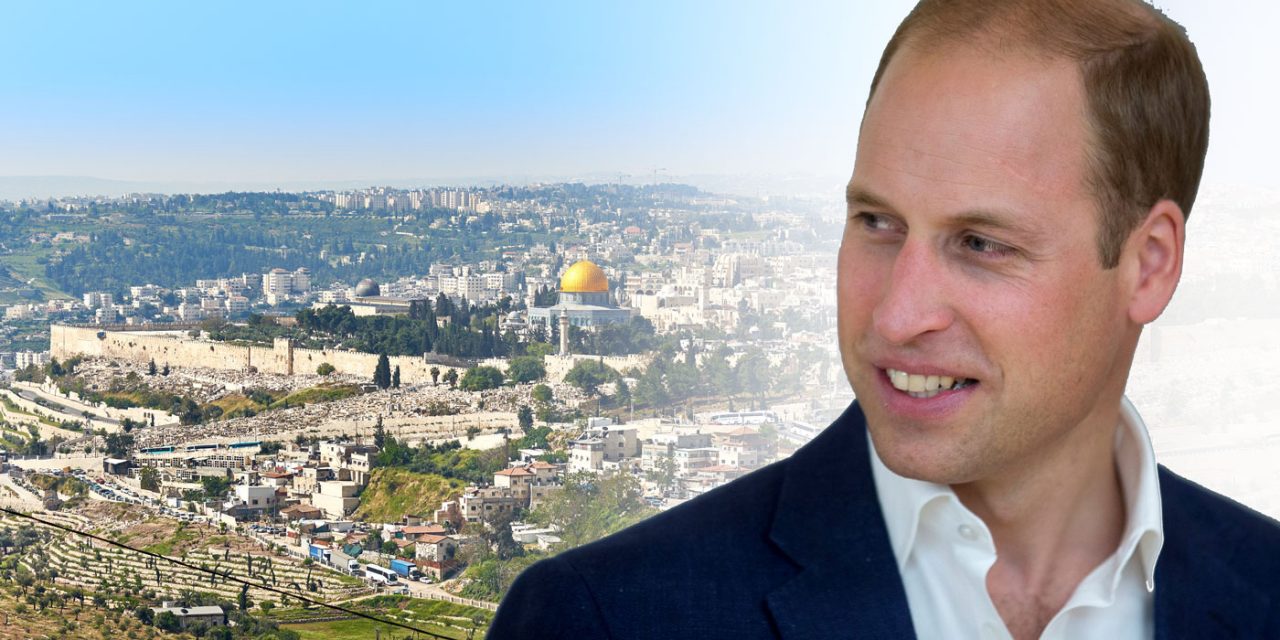
Prince William’s pending visit to Israel will be an historic and extremely important event for the United Kingdom.
Set to take place this summer, the Duke of Cambridge will become the first member of the British Royal family to officially visit Israel – and it happens in the same year that Israel celebrates 70 years since national independence and America recognises Jerusalem as capital.
But why after almost two-thirds of a century is the visit happening now? And what could it mean for Britain and its relationship with Israel?
Royal visit signals a remarkable development at the Foreign Office
Official visits are organised and taken on the advice of the Foreign Commonwealth Office. The Queen has visited 129 different countries, including many of Israel’s Middle Eastern neighbours, but not Israel. The question remains, why?
A number of Royals have visited in the past, but only on a private basis. 
In 1994, after years of not being allowed by the Foreign Office, the Duke of Edinburgh visited the grave of his mother, Princess Alice of Greece, who sheltered a Jewish family in her Athens home during the Holocaust. 
Prince Edward has also visited privately, and Prince Charles attended the funeral of former Israeli president Yitzhak Rabin in 1995 and more recently that of Shimon Peres in 2016. It was during this visit that he made a speedy unannounced visit to the tomb of his grandmother, Princess Alice, on the Mount of Olives.
An official visit by Prince Charles was announced to take place in 2017, the Centenary year of the Balfour Declaration, however it was reportedly scrapped by the Foreign Office.
The press reported that the decision was thought to have taken place to “avoid upsetting Arab nations in the region who regularly host UK Royals”.
Colonel Richard Kemp, a former Commander of British Forces in Afghanistan, and friend of CUFI, branded the decision an “insult to British war dead” and slammed the Foreign Office as “camel corps” who were “pandering to Arab dictators”.
One Israeli journalist, the late David Landau, said that every time he’s asked a British official about this he “gets a muttered line about ‘when there’s permanent peace’”.
Permanent peace, of course, hasn’t arrived… but the long-waited decision, for whatever reason, finally has.
Since launching in the UK, CUFI has been pressuring the Foreign Office to take a stronger stand with Israel. For example, CUFI has lobbied the UK Government urging for the recognition of Jerusalem as capital of Israel; we delivered thousands of Jerusalem postcards to the Foreign Secretary and we have called for Britain not to apologise for the Balfour Declaration, but to stand with Israel, our strongest ally in the Middle East. 
CUFI and partner organisations have been knocking on the door of Government more frequently and with greater vigour over recent months. No longer is the anti-Israel narrative the only voice being heard in Parliament. The game has changed. A different, more truthful voice is now being heard. CUFI supporters are part of these important efforts to engender a change of policy towards Israel at the Foreign Office. There is a long way to go, but perhaps this is the first step in seeing this change take effect.
We need to be aware of Royal visit implications
Whilst CUFI welcomes the announcement with enthusiasm, there is great danger that the pro-Palestinian movement will try to hijack the visit for their own anti-Israel agenda and that the Prince’s visit will be used by some to manipulate attitudes against Israel.
Already we have seen news agencies delegitimise Israel through their headlines about the Royal visit. As CUFI highlighted last week, the visit was announced across the mainstream media with a blatant bias against Israel. Because the Prince will also be visiting the Palestinian Territories and Jordan, the BBC, Sky and others used headlines that omitted Israel. CUFI will be challenging the biased-media surrounding the announcement and will be holding the main channels to account to ensure that coverage is representative of the visit. 
We need to pray that the hypocrisy of the Israel-haters will be exposed and that Prince William will not be used as a pawn for their antisemitic ploys. We can also expect that the boycott movement will be trying to derail William’s Israel trip and demonise Israel in the process. This is because Prince William’s visit to Israel is an acknowledgement by British Government of Israel’s legitimacy. 

Royal visit could be defining-moment for the UK
Britain’s foreign policy towards Israel hasn’t always maintained the standard set by Arthur Balfour in 1917. But could this visit usher in a turning point? 
We are sure Israel will warmly receive the future king. William will enjoy Israeli hospitality, experience Israeli innovation, and, we hope, see first-hand the historical connection that Jews and Christians have to Jerusalem. If he visits the grave of his great-grandmother, he will become the first member of the Royal Family to officially visit the Mount of Olives. We also expect that in the footsteps of his mother, humanitarian and peace initiatives will also be on the agenda. 
William, who is second in-line to be Head of the Church of England and “defender of the faith” should recognise that the United Kingdom will be blessed by blessing Israel. We don’t know Prince William’s personal view of Israel, but we pray that this trip brings a revelation of God’s historic, present and future purpose for Israel and the land, which remains part of Almighty God’s plan to bless all the nations of the earth.
Two of Israel’s closest allies, America and Britain, are taking unprecedented, symbolic steps in recognising the importance of Israel. In the 70th anniversary year of Israel’s rebirth, what better time to put past diplomatic failings behind and renew our national commitment to the State of Israel.
Christians United for Israel UK

After Mahmoud Abbas: A Bloodbath in the West Bank?

The day after his February 20 address to the UN, the Palestinian Authority (PA) president Mahmoud Abbas checked himself into Johns Hopkins Hospital for what his spokesmen say was a routine checkup. Despite these official assurances, Abbas’s hospital visit set off much speculation about his health, which in turn revived conjectures as to who would replace him in the event of his death. Benny Avni comments:
It’s . . . possible that, . . . as Israelis fear most, in lieu of a clear line of succession, a Palestinian bloodbath will determine the winner.
Abbas has never named a successor. Yes, he recently crowned a deputy Fatah chairman. But the man, Mahmoud al-Aloul, is almost unknown outside Ramallah and thus is a weak contender: as in much of the Arab world, would-be Palestinian leaders must be backed by armed men. Gray apparatchiks are at a distinct disadvantage.
Which brings us to Hamas, the uncontested ruler of Gaza. According to the Palestinian constitution, once the current president can no longer function, the speaker of the legislative council becomes interim leader. That position is held by a Hamas politician, Aziz Duwaik. As is shown by Abbas’s twelve years as president after being elected for four, temporary can last forever.
So Hamas, a U.S.-designated terrorist organization, may end up taking over West Bank politics, burying any hope of better Israeli-Palestinian relations. Washington, as yet, has been mostly mum, but if America wants to remain relevant in the Mideast, it must draw some red lines and clarify our interests: avoid a bloody succession battle; make sure Hamas stays out of power; ensure the next leader continues security coordination with our allies Jordan, Egypt and, most crucially, Israel.

Why Is the U.S. State Department Backing a Lebanese Land (and Sea) Grab?

In recent weeks, high-ranking State Department officials have involved themselves in mediating territorial disputes between Israel and Lebanon. One of these disputes, writes Evelyn Gordon, is based on a real problem—the lack of a recognized international maritime boundary between the two countries—although the State Department’s proposed solution tilts unreasonably in Beirut’s favor. The other, however, is the result of a spurious Lebanese claim:
[According to Beirut], Israel’s planned new border wall encroaches on Lebanese territory in thirteen places. And on this, there should be no question whatsoever, because a recognized international border, known as the Blue Line, already exists and the UN has twice affirmed that Israel isn’t violating it. . . .
Given the existence of both a recognized international border and unequivocal UN confirmation that Israel hasn’t violated it, the only proper response to Beirut’s protest over a new fence would be to tell it politely that it has no case whatsoever. The territory in question is unarguably Israel’s, and Israel is free to build whatever it pleases there.
Instead, the State Department has treated Lebanon’s claim as legitimate. Secretary of State Rex Tillerson demanded that Israel halt construction until it reaches an agreement with Lebanon on the border, while Assistant Secretary of State for Near Eastern Affairs David Satterfield proposed land swaps to satisfy Lebanon’s claims. In other words, the State Department is asking Israel to cede land that the UN Security Council unanimously recognized as sovereign Israeli territory just because a thuggish neighbor covets it and has threatened war if its demands aren’t satisfied.
Needless to say, this is an excellent way to encourage aggression. If Lebanon can get Washington to pressure Israel to cede internationally recognized Israeli territory merely by claiming land to which it lacks any vestige of right and then threatening war if its demands aren’t met, why wouldn’t Lebanon—or any other country interested in grabbing Israeli land—keep repeating this tactic?

An Interview With Sheik Mowafaq Tafik, Spiritual Leader of the Israeli Druze

Sheik Mowafaq Tafik has been the spiritual leader of the Israeli Druze community since 1993. He comes from a line of spiritual leaders that began in 1753. The sheik studied the Druze religion in Lebanon and holds a degree in law from Haifa University. The Druze religion has one million adherents, mainly in Syria and Lebanon. There are 140,000 in Israel, most of whom live in the north. The religion was established in Egypt by Muhammed bin Ismail Nashtakin ad-Darazi and Hamza ibn ‘Ali ibn Ahmad, Ismaili mystics and scholars, around the year 1016 CE. The religion recognizes all the Abrahamic prophets. It does not consider itself as a part of Islam.
Tafik speaks with Moment about the plight of his fellow religionists in Syria, and on raising the profile of the Druze among American Jewish leaders.
What has been happening to the Druze people in Syria?
In November 2017, the extremist group Jabhat Al Nusra, associated with Al Qaeda, sent a car bomb into the Druze village Hader, located in Syria, just beyond the Golan border, and killed 17 Druze. We turned to the Israeli government to help our people and the government has committed to stopping any terrorist acts in this village, even though it is on the other side of the border. An even more difficult area is in the North in Irbil near the Turkish border, where many Druze live. There is a huge battle between Jabhat al-Nusra, who are fanatical Muslims, and the Syrian, Russian, Iranian and Turkish forces. More than 50,000 Druze live there in 17 villages. The extremists sometimes make the Druze sell their property and force them out of Idlib and into the mountains. They destroy Druze holy sites. In some case, they try to convert to Sunni Islam. The situation is very chaotic. One reason I came to the United States is to warn the free world about massacres of Druze and other minorities in Syria who are at risk. I ask for the United States to see our pain and become more involved.
What is the origin of the Druze religion and its relationship to Judaism?
The Druze and the Jews are brothers in history. The alliance began at the time of Moses, who took the Jewish people from Egypt and led them to the promised land. When Moses was young he spent time in the Sinai and met Jethro, the prophet, peace be upon him, the father of Zipporah, whom Moses married. Jethro taught Moses how to organize the Jewish people. In our tradition Jethro is the father of the Druze people. Our religion was established in the year 1016 in Egypt. We believe in and accept all the prophets. We have tolerance for others, for other religions. We are monogamists—not allowed to marry more than one woman. That is a difference between us and Islam. Also, we made sure that women were protected and have rights to divorce. In our religion there are the secular and the religious—uqqal in Arabic—which means “wise person.” Women are permitted to study the Druze religion and to become uqqal. We also believe in taqiyya, loyalty to the place where you live. We want to protect our faith. We do not persecute or discriminate against others. We do not accept converts.
What has been the relationship of the Druze community to Israel?
Even before the Second World War, the Druze community joined and was an ally and friend to the Jewish people. We decided to be with the Jewish people without any agreement, any condition or payment, except that we all had legitimate rights. And we are very proud that we serve the state. Beginning in 1956 our youth began to serve in the army. Now 85 percent serve. The Druze in Israel are fully involved in economic and social life. Many of them carry senior government positions and are partners in building the country. For many years we have been committed to building connections in Israel between minorities and the majority. We thought that the state of Israel would help us as it does for the Jewish people, but for many years this did not happen. Perhaps it was because we are such a small community. We must separate between the Jewish people and the government. The Jewish people love the Druze, and they are happy to be our neighbors. But the problem has been the government and the political parties. Only in 2014 did I meet with Netanyahu, and the government agreed on a five-year plan to put money into Druze infrastructure and education. This is helpful but not enough, and the funds are slow in coming.
How do the Druze youth maintain their religion while they are in the army?
For the four years before entering the army, every young Druze takes heritage seminars. They study our religion and traditional mentality. This could be called a Druze mechina—“preparation” for the army. We explain to the young people the dangers and the positive and the negative about the army. Sometimes we have a problem with young people who make mistakes, but we do our best. And don’t forget, every two or three weeks these youths are back with their family, which continues to educate them. Of course, there are small numbers who marry outside the community. And many have jobs in Haifa, Tel Aviv, etc.
How do the Druze do in education?
The Druze study all the fields of the life—math, English, music, everything. Some Druze high schools (Beit Jann) are among the best in the country. But especially in education, the budget given to Jewish students is greater than that for the Druze. We need scholarships to make sure that our young people go to the university after they come back from the army. After army service the families are trying to keep tradition and the mentality. Many ask their children not to leave to study and instead to get married and build a home. This creates a future problem, since they will not have a university degree. I and other Druze leaders are trying to encourage young people to study before they marry and build homes. We are asking the government to increase its budget and especially to offer scholarships for Druze youths to study in the university.
How many Druze are in the Knesset? 
There are five members, one each in the Zionist Union, Kulanu, Yisrael Beitenu, Likud, and the Arab list. We listened to the experience of the Jewish people and so we did not put all the eggs in one basket. If the Druze would establish our own party, we would not get even one vote.
You just visited the Holocaust Museum. What was your personal reaction to this experience as well as its relationship to the history of the Druze people?
While there is no one who can guarantee that something like this could not happen again, I believe that the answer to the Holocaust has been to create a state of Israel that is strong enough to defend itself as well as the Druze people. One thousand years ago, when the Druze religion started, the majority around us persecuted and killed many of us. That is the reason that Druze families, the people and the community decided to live in the high mountains, to protect ourselves and save our lives, because we continue to be persecuted through these 1000 years. So, we understand the persecution of others.

With UN exhibit, Israel sends message that '3,000 years of history cannot be denied'


Exhibit displaying archaeological proof of continuous Jewish history in Jerusalem follows series of U.N. resolutions denying Jewish ties to city • Israel's U.N. envoy: Historical truth best answer to attempts to dispute Jewish connection to Jerusalem.
As part of his five-day visit to the United States, Prime Minister Benjamin Netanyahu will stop at the U.N. Headquarters in New York on Thursday, to check out a special exhibit aimed at providing archaeological proof of the continuous Jewish history in Jerusalem.
The exhibit, a joint effort by the Jerusalem Affairs and Heritage Ministry and the Israeli Mission to the U.N., follows a series of resolutions passed by the U.N. denying Jewish ties to the city.
Ambassadors, diplomats and senior U.N. officials have all been invited to view the exhibit, which presents authentic archaeological findings discovered in Israel alongside replicas of other findings that serve to illustrate the connection between the Jewish people and Israel's capital.
Among the archaeological findings on display are a 2,700-year-old seal impression inscribed in ancient Hebrew, which was discovered in Januaryand an inscription from the seal of biblical King Hezekiah who ruled from 727-698 BCE and helped build Jerusalem into an ancient metropolis.
According to Israeli Ambassador to the U.N. Danny Danon, "The historical truth is the best answer to the attempts to dispute the eternal connection between the Jewish people and their capital."
Jerusalem Affairs and Heritage Ministry Minister Zeev Elkin said he and other Israeli officials would be coming to the U.N. for the exhibit "to tell them in the clearest possible manner: 3,000 years of history cannot be denied."